Until not long time ago, the most common ways of entertainment were reading books or listening to music. Then by mid of 20th century television started to gain in popularity and watching a movie at home has become very much a new common habit to enjoy our leisure time. However the first TV sets were... Continue Reading →
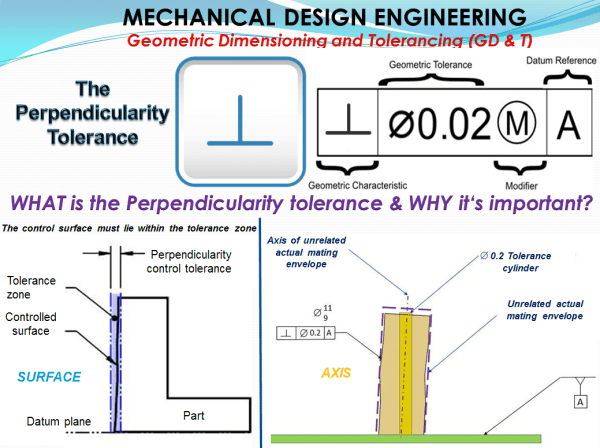
MECHANICAL DESIGN ENGINEERING – Geometrical Dimensioning and Tolerancing_What is the PERPENDICULARITY tolerance?
In a mechanical design of an assembly made up of various parts it is often the case to make sure the functional elements are perpendicular to a reference. In GD & T this is called Perpendicularity Tolerance. Like parallelism, the perpendicularity tolerance is also an Orientation tolerance from the sub-group of Direction tolerances. Therefore for... Continue Reading →
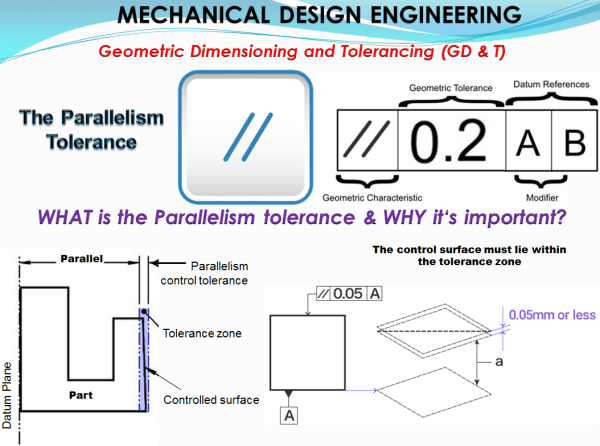
MECHANICAL DESIGN ENGINEERING – Geometrical Dimensioning and Tolerancing_What is the PARALLELISM tolerance?
When you create a part as CAD data sure you can create a beautiful animation and virtually your part is perfect. But if you also intend to produce it, then without using GD & T for functional geometrical elements your CAD work remain only a virtual concept of something. It won´t work for real. Therefore... Continue Reading →
CATIA V5 – GENERATIVE SHAPE DESIGN – BOTTLE OPENER – 2 design versions
Working with CAD platforms is an engineering area in which the ideas for new concepts and imagination are unlimited. It is impossible to create fixed standards about how to design new products, which design features to be used and how to strictly organize the model tree structure. This is entirely up to the mechanical designer.... Continue Reading →
Alcohol Consumption: A Double-Edged Sword – The poison whose charms we willingly submit
There are not many things which can be taken as defining elements of the human history and civilization, but there are few. Except the first 6 metals used by humans namely Copper (Cu), Gold (Au), Silver (Ag), Iron (Fe), Tin (Sn) and Lead (Pb), and water (H2O) which is the most abundant and consumed liquid... Continue Reading →
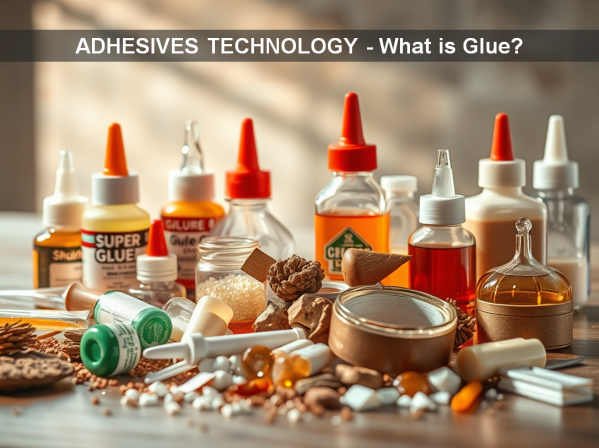
ADHESIVES TECHNOLOGY – What is Glue?
From the first objects ever created by man we always needed to put parts in a functional assembly. Nowadays, our technology is already advanced and the objects we create are almost entirely made of different parts put together in a stiff and functional product. There are multiple ways we can do this.In case of plastic... Continue Reading →
CATIA V5 – Relational Design Method – MOUSE DESIGN
Mechanical design exist for very long time. People have always created objects in different ways. Since the invention of CAD platforms mechanical design of things didn´t change the way how people imagine the objects they wish to create but these CAD platforms are today very powerful and even if it doesn´t really matter which such... Continue Reading →
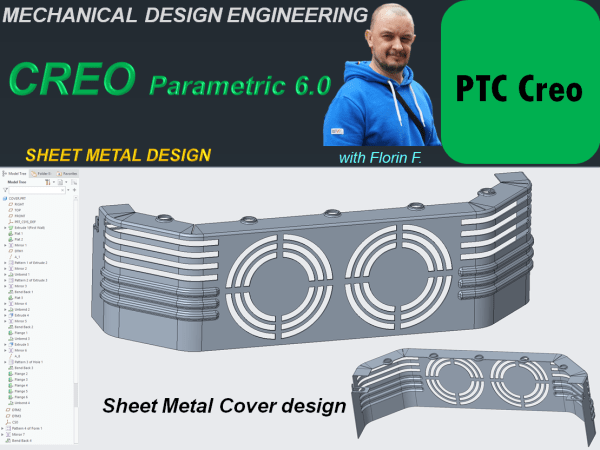
CREO PARAMETRIC 6.0 – SHEET METAL DESIGN_Sheet metal cover.
In manufacturing is often the case that parts are metalic and have a specific constant thinkness. In CAD of course no problem to design such a part but the work is much faster and effective is you don't design these parts using the standard way of doing it as Solid component but instead you do... Continue Reading →
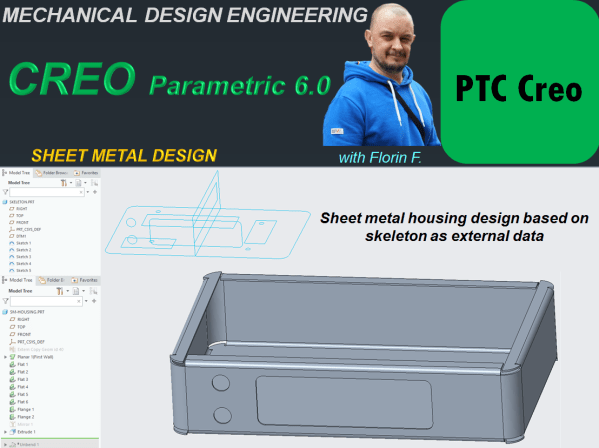
CREO PARAMETRIC 6.0 – SHEET METAL DESIGN_ Sheet metal housing design based on skeleton as external data
Depending on the project complexity the CAD work regarldless the CAD platform can be done in different apporaches. You can create a part completelly from skratch OR you can reuse some data already defined that can be reused for different other component parts of the project (for example to use data from a skeleton sketch... Continue Reading →
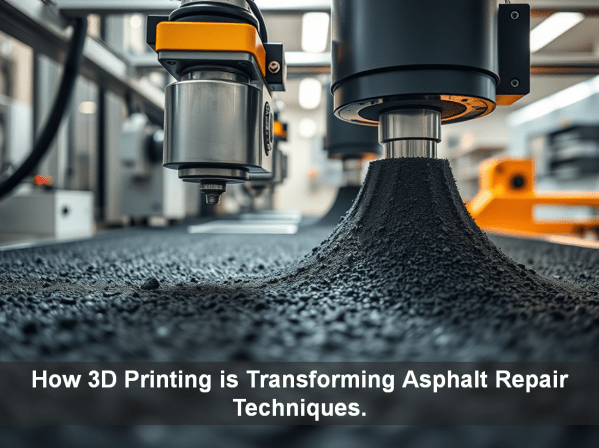
How 3D Printing is Transforming Asphalt Repair Techniques.
3D Printing is a relatively new technology which has gained a lot of attention lately. More and more application using this new tech-development have been already successfully implemented in various industries. Now it is going to be used on building roads too. A new research has been quite recently done by a group of scientists... Continue Reading →