In manufacturing is often the case that parts are metalic and have a specific constant thinkness. In CAD of course no problem to design such a part but the work is much faster and effective is you don't design these parts using the standard way of doing it as Solid component but instead you do... Continue Reading →
CREO PARAMETRIC 6.0 – SHEET METAL DESIGN_ Sheet metal housing design based on skeleton as external data
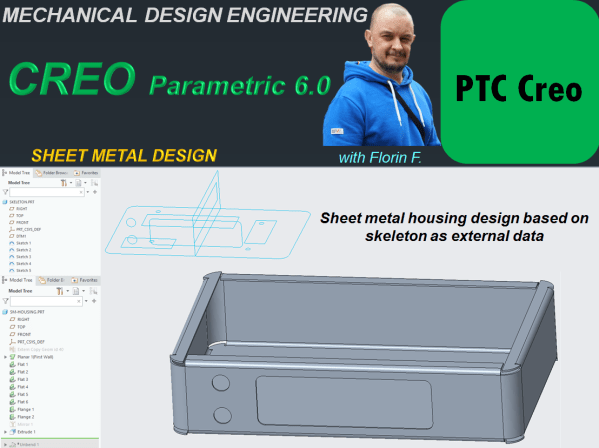
Depending on the project complexity the CAD work regarldless the CAD platform can be done in different apporaches. You can create a part completelly from skratch OR you can reuse some data already defined that can be reused for different other component parts of the project (for example to use data from a skeleton sketch... Continue Reading →
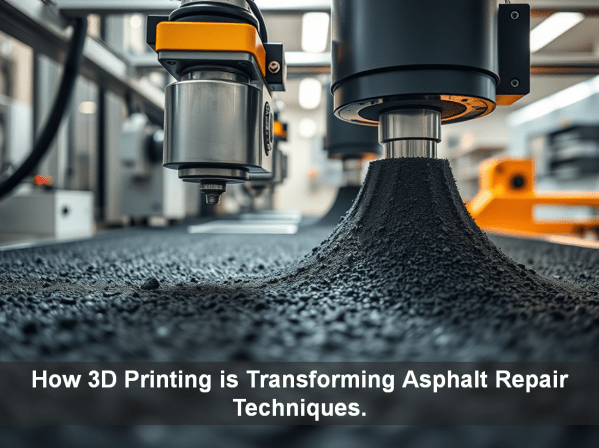
How 3D Printing is Transforming Asphalt Repair Techniques.
3D Printing is a relatively new technology which has gained a lot of attention lately. More and more application using this new tech-development have been already successfully implemented in various industries. Now it is going to be used on building roads too. A new research has been quite recently done by a group of scientists... Continue Reading →
Why do we use Asphalt for roads?
When you hear the word “Asphalt”, most probably you think of the black tar stuff on roads and highways, right? But that’s not exactly correct. Asphalt is the liquid that is in the road, it’s the binding agent that kind of holds the rocks together. The difference is that the Asphalt comes from crude oil,... Continue Reading →
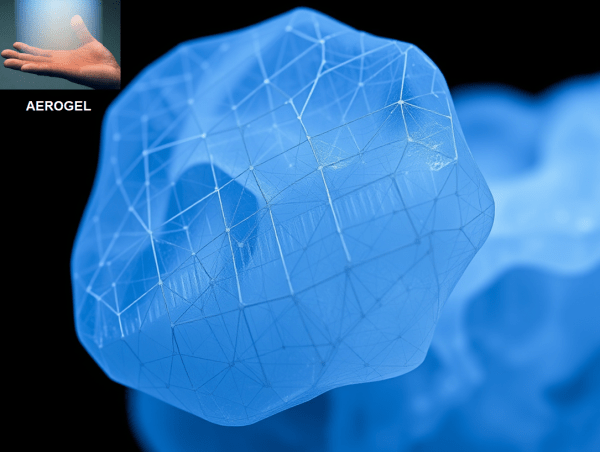
The Lightweight Solution: Silica Aerogel in Space Missions
At first glance aerogel resembles a hologram. It's deceiving whether it's really there or not. A highly porous solid material, aerogel has the lowest density of any solid materials known to man. It is 1000 times less dense than glass, aerogel has earned the nickname "solid blue smoke". At the time in the early 1980s,... Continue Reading →
Why Silica Aerogel is the Best Thermal Insulator Known?
Besides being the lightest solid known to man, the aerogel has another remarkable property: it’s thermal insulation.With other words its ability to act as a barrier against heat. Aerogels are so good at this that you can put the flame of a Bunsen burner on one side of a piece of aerogel and a flower... Continue Reading →
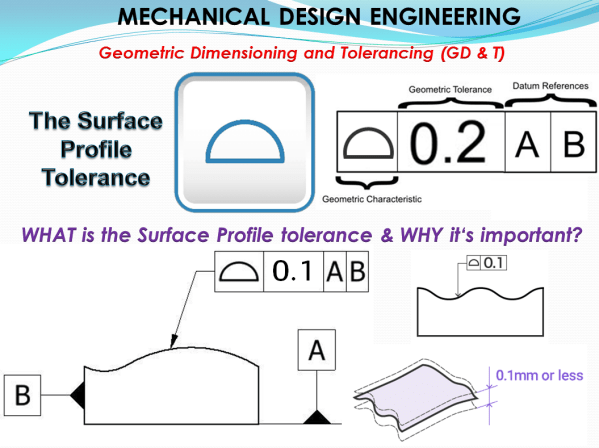
MECHANICAL DESIGN ENGINEERING – Geometrical Dimensioning and Tolerancing_What is the SURFACE PROFILE tolerance?
For quite a long time mechanical parts were controled based on their regular forms such as planar form, cylindrical form or spherical form, but when parts become more complex in form such measurements based on simple features were not possible anymore. Such irregularly shaped profiled features couldn’t be geometrically controlled until 1966 when the first... Continue Reading →
MECHANICAL DESIGN ENGINEERING – Geometrical Dimensioning and Tolerancing_What is the LINE PROFILE tolerance?
The mechanical description of a part is usually done by using simple geometrical form features such as lines, planes, circles or cylinders. But in many cases mechanical parts have complex geometrical structures and their form deviations must be described more specifically. Therefore when your product is getting complex in form (e.g. automobiles, airplanes, ships) with... Continue Reading →
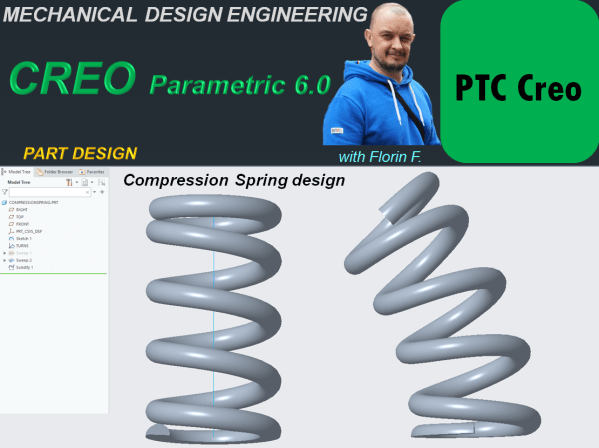
CREO PARAMETRIC 6.0 – PART DESIGN_Compression spring design.
Designing Helical Shapes such are Springs with variable pitches sometimes is a challenge, mainly for the beginners. But things are very simple to do & control, CREO Parametric is an excellent tool for that and in this post I will show you how to do such design work. Step 1. Create New Part I click... Continue Reading →
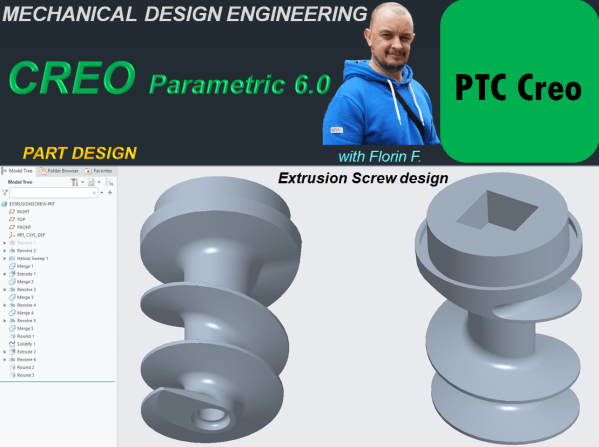
CREO PARAMETRIC 6.0 – PART DESIGN_Extrusion screw design
CREO Parametric it is indeed very Parametric CAD platform. Designing with CREO is super effective, it´s a pleasure to work with it, I love this software. It´s powerful, it´s fun, it´s user friendly and you can use it in any type of mechanical design projects. In this post I want to show you an example... Continue Reading →