For this exercise I am gonna show you how to generate a tracking line in a 3D simulation which can be very useful in many situations. Let´s say for example the windshield wiper: You simulate its motion but you also want to see exactly the area in which the wiper moves. For this is very... Continue Reading →
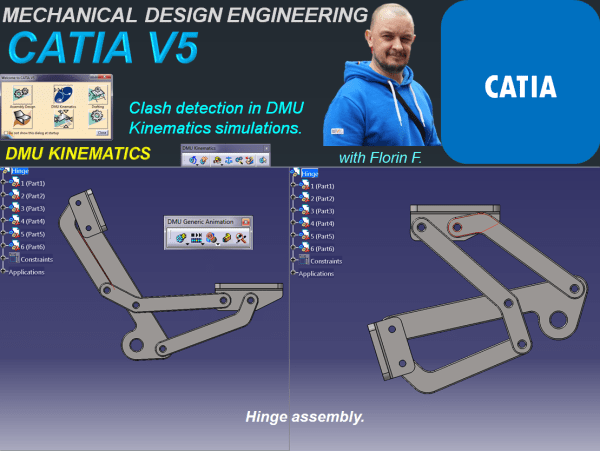
CATIA V5 _DMU KINEMATICS_Clash detection in DMU Kinematics simulations_Hinge assembly.
It is often the case that you want to make sure your mechanism works properly without clashes between its component parts. DMU Kinematics offers you the possibility to check your mechanism during simulation and easily detect any possible clash that might occur when you put your mechanism at work. Actually this is a very simple... Continue Reading →
How Earthquakes Trigger Tsunamis: Lessons from History
On 26th of December -2004 thousands of tourists mostly Europeans and Americans had flocked to the beaches of Sri Lanka, Indonesia and particularly on the island of Phuket in Thailand to escape the winter chill in a tropical paradise. In that morning at 8 am tourists were walking on the beach when they noticed something... Continue Reading →
Why We Can Never Control Nature: A Deep Dive into Water
It is often said that humans are the most intelligent beings on planet earth and because of these outstanding abilities we should be able to control everything. At some point with the technology development we indeed can control a lot of things, but we will NEVER be able to control the Nature. That’s simply impossible.... Continue Reading →
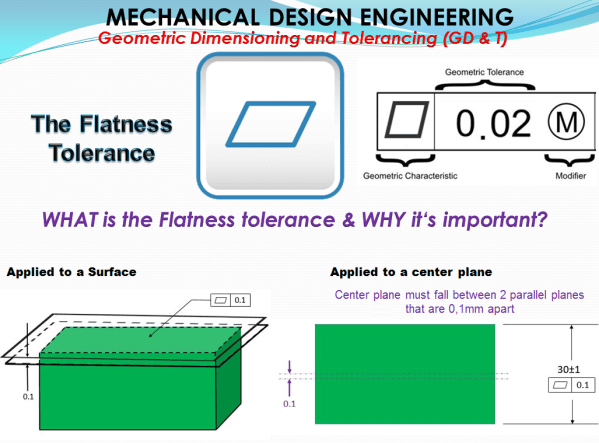
MECHANICAL DESIGN ENGINEERING – Geometrical Dimensioning and Tolerancing_What is the FLATNESS tolerance?
All the time when you want to make sure something is accurately closed/sealed the parts that are joined in your mechanical assembly product must have a specified restriction for how tight that closure must be. For this reason is essential that these parts are designed by default with such important specification which in Mechanical Design... Continue Reading →
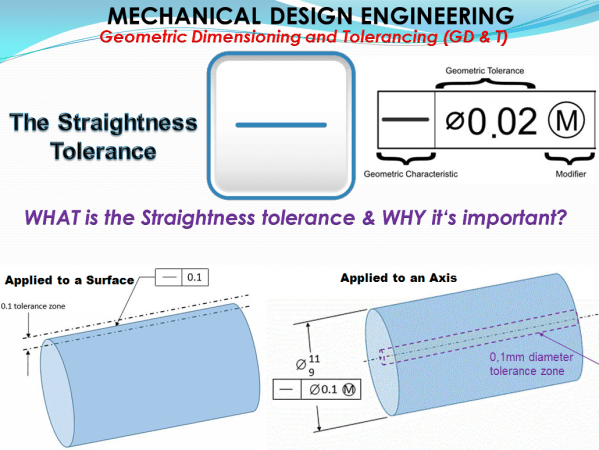
MECHANICAL DESIGN ENGINEERING – Geometrical Dimensioning and Tolerancing_What is the STRAIGHTNESS tolerance?
In every new product development process there are different stages to go through until the first official release is available for mass production. In early stages of product development you have the opportunity to test as many prototypes as possible, nothing must be strictly defined; however after few iterations, many tests and approval processes you... Continue Reading →
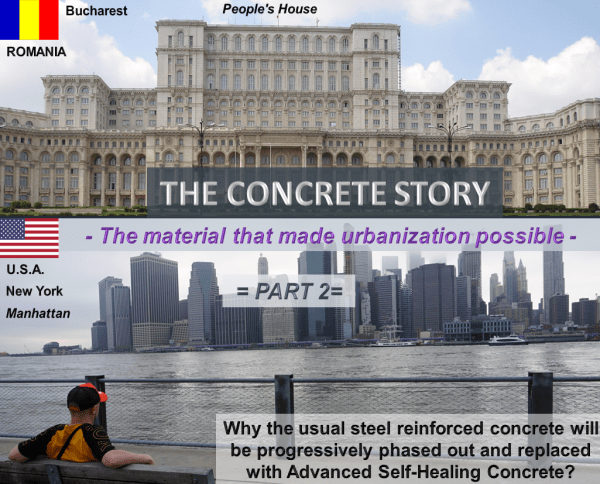
THE CONCRETE – The material that made urbanization possible_ PART II (WHY the usual steel reinforced concrete will be progressively phased out and replaced with Advanced Self-Healing Concrete?)
In the Part 1 of The Concrete Story I told you about how the steel reinforced concrete has become the most multipurpose building material of all time: And it it is, but with one very important condition: **Once the building is complete, it must regularly maintained. If not, well... then you get what you pay... Continue Reading →
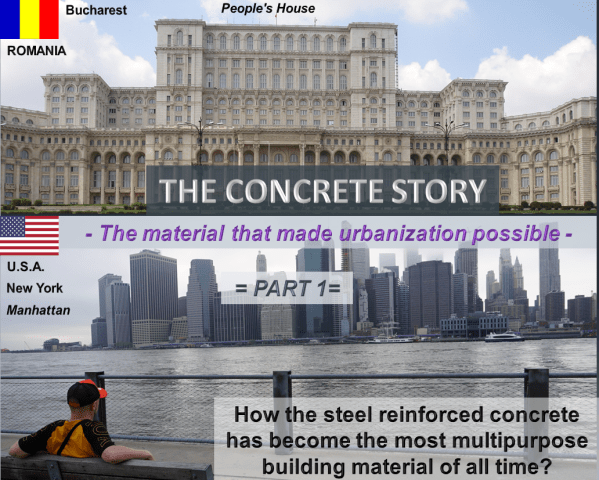
THE CONCRETE – The material that made urbanization possible_ PART I (How the steel reinforced concrete has become the most multipurpose building material of all time?)
For its entire existence human race always needed and will forever need 2 essential things in order to survive: Food and Shelter. The first humans were hunter-gatherers, their only source of food was obtained through hunting and fishing. Then humans learned that food can also be produced, so they became farmers. Sometime about 10,000 years... Continue Reading →
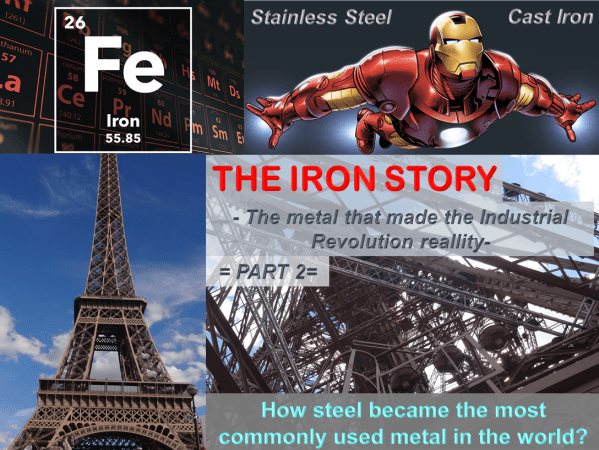
IRON- HOW steel became the most commonly used metal in the world?
It all started when people discovered that Iron can react with Carbon and by controlling the process something amazing is happening. This is how we start getting steel from iron. IRON with around 5% of the Earth’s crust and as the 6th most common element in the universe, iron is a highly abundant and immensely... Continue Reading →
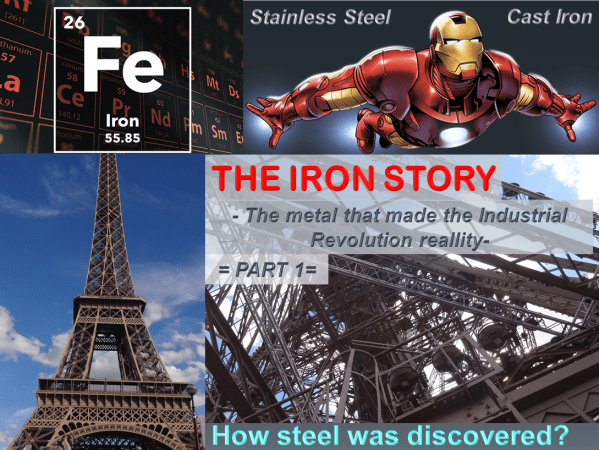
IRON- The metal that started the Industrial Revolution_ HOW steel was discovered?
From all the metals humans ever used non of them created a revolution in technology at the scale Iron did. This metal became the reference element in metallurgical studies for other metals as well. If you understand Iron you actually understand not only metals but you understand the entire material science engineering. In this post... Continue Reading →