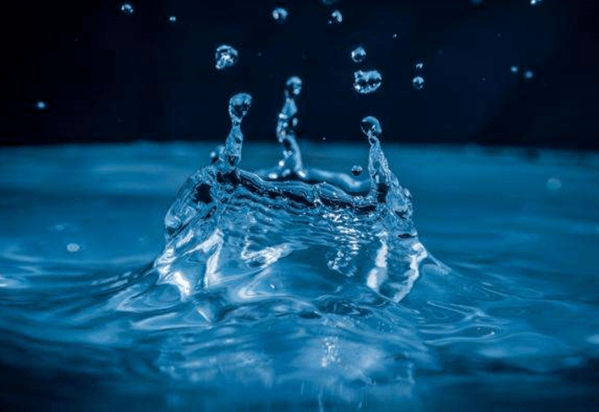
Liquid and gas are 2 different states of matter yet they have a lot in common. Both are fluid and both have free flow. In physics, the term fluid refers to any material that continuously changes its shape and form under the influence of any force or stress. The shear modulus of fluid is zero,... Continue Reading →
THE 2nd STATE OF MATTER – LIQUID
We usually use the terms liquid and fluid interchangeably in general to refer to a substance which is in a liquid state, such as water. However, there is a stark difference in both terms. In physics, the term fluid refers to any liquid, gas or other material that continuously changes its shape and form under... Continue Reading →
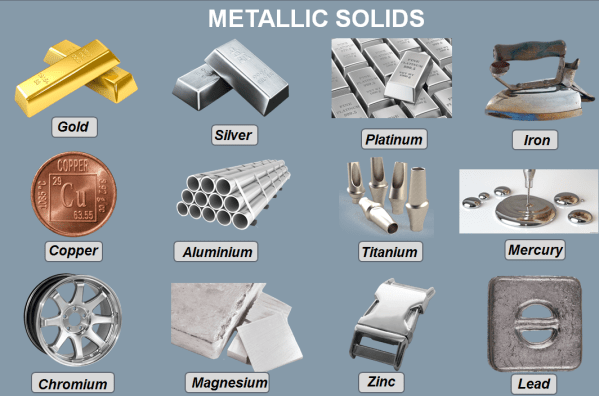
WHAT ARE THE METALLIC SOLIDS?
In this article Iet's talk about the most common type of solids: THE METALLIC SOLIDS. These are the ones which we use on daily basis. Just look around you and you'll notice that most man-made objects are either made of a metals or at least contain 1 metallic component. For example, your watch has metal... Continue Reading →
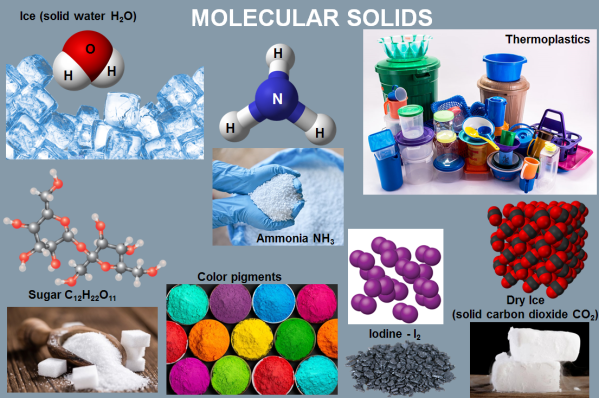
WHAT ARE THE MOLECULAR SOLIDS?
During the wintertime when it snows, if you are like most school kids, you get pretty excited about snowy days. On your day off, you might go outside and play in the snow as you watch the snowflakes fall. When a snowflake lands on your gloved hands, you can see the shape of the snowflake... Continue Reading →
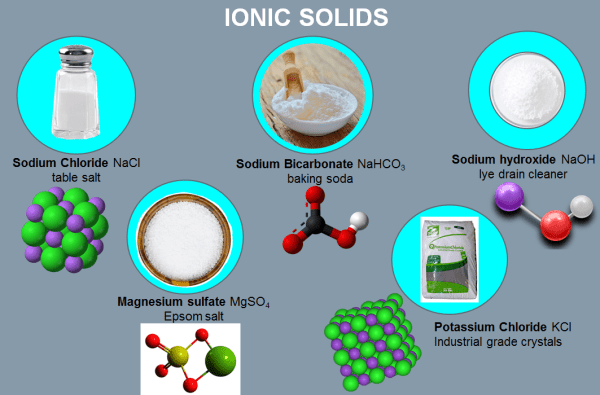
WHAT ARE THE IONIC SOLIDS?
The category of solids you'll read about next has very much to do with our food, simply because eat them. These are THE IONIC SOLIDS. Let just start with an example. Have you ever used Epsom salt to help with muscle soreness and stress? If you do, then let me tell you that Epsom salt... Continue Reading →
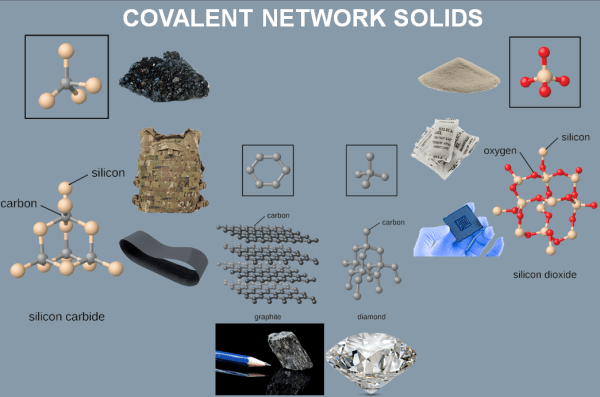
WHAT ARE THE COVALENT NETWORK SOLIDS?
Solid is the 1st state of matter and also the most studied and used. Anyone entering into materials science engineering the 1st stage of study starts with learning and understanding solids. In my previous article I was briefly introducing the concept of SOLID, what is it, how does it occur and what are it main... Continue Reading →
THE 1st STATE OF MATTER – SOLID
The Periodic Table of Elements contains 118 elements we currently have knowledge about. 92 of them occur naturally on Earth , all the rest are artificially made. Most of the 118 elements at normal temperature (20°C) and pressure (1atm), occur in solid state, a few are gases and just 2 are liquid (mercury Hg and... Continue Reading →
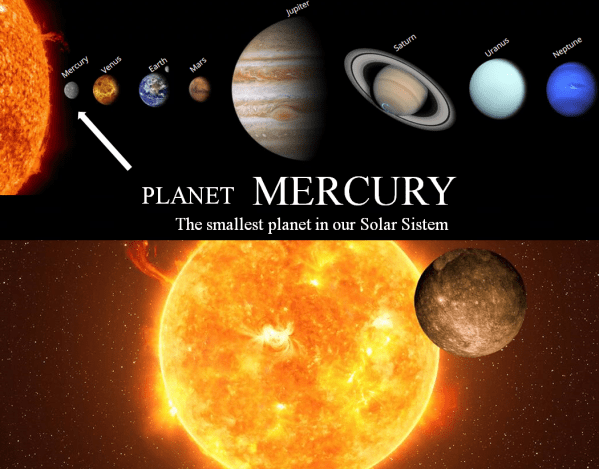
MERCURY: The atmosphere on the smallest planet in our solar system
Mercury is a planet without much of atmosphere and its surface full of craters tells us about the great cosmic bombardment a.k.a. the Late Heavy Bombardment which is a hypothesized event thought to have occured approximatelly 3.9 billion years ago. It's not easy to find information about the early life of this globe, because Mercury... Continue Reading →
MERCURY: The 1st Planet from the Sun and smallest in our solar system.
All the technology we have so far is based on materials available on our planet. At least for now. However at one point in time as technology continues to advance we might be able one day to exploit natural resources available in our Solar Sistem. Except Earth there are 4 bodies outhere we can consider... Continue Reading →
MECHANICAL DESIGN ENGINEERING – Geometrical Dimensioning and Tolerancing_What is the TOTAL RUNOUT tolerance?
Runout is a very effective geometric tolerance which can be applied on any rotationally symmetrical parts. Depending on functional requirements, RunOut tolerance can be either measured on each individual point distributed arbitrary along the tolerated circular element which in this case is specifies as Circular RunOut tolerance. Or can be measured over the entire surface... Continue Reading →