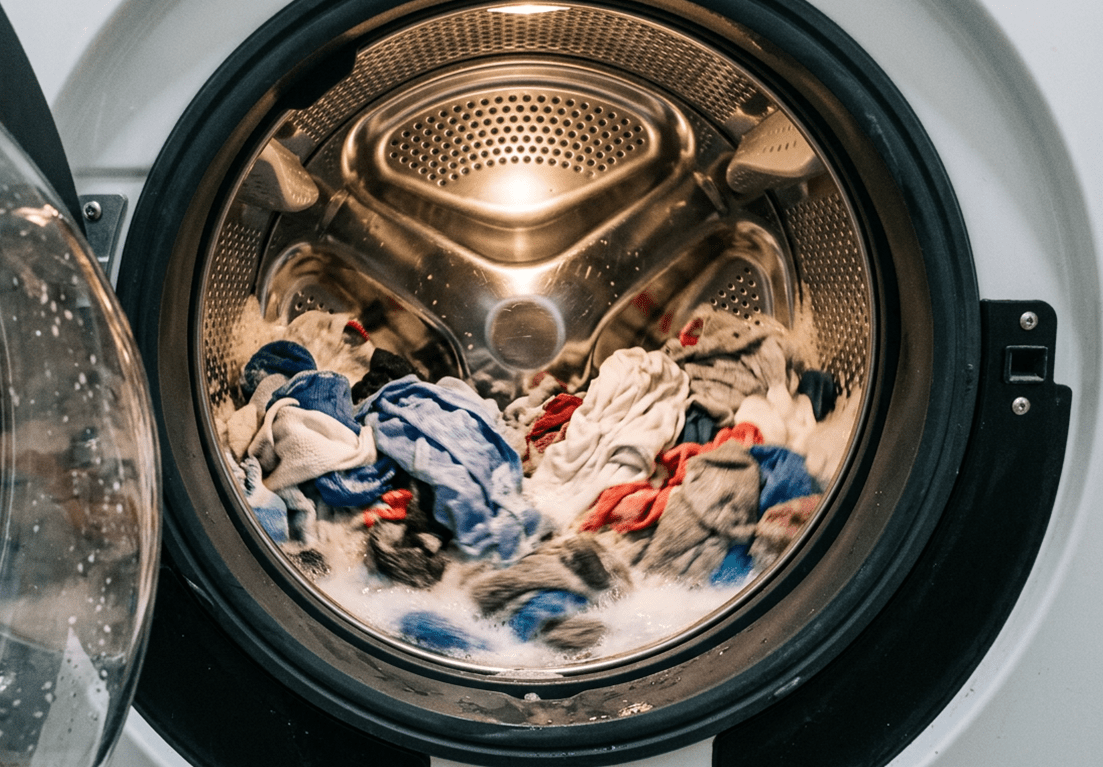
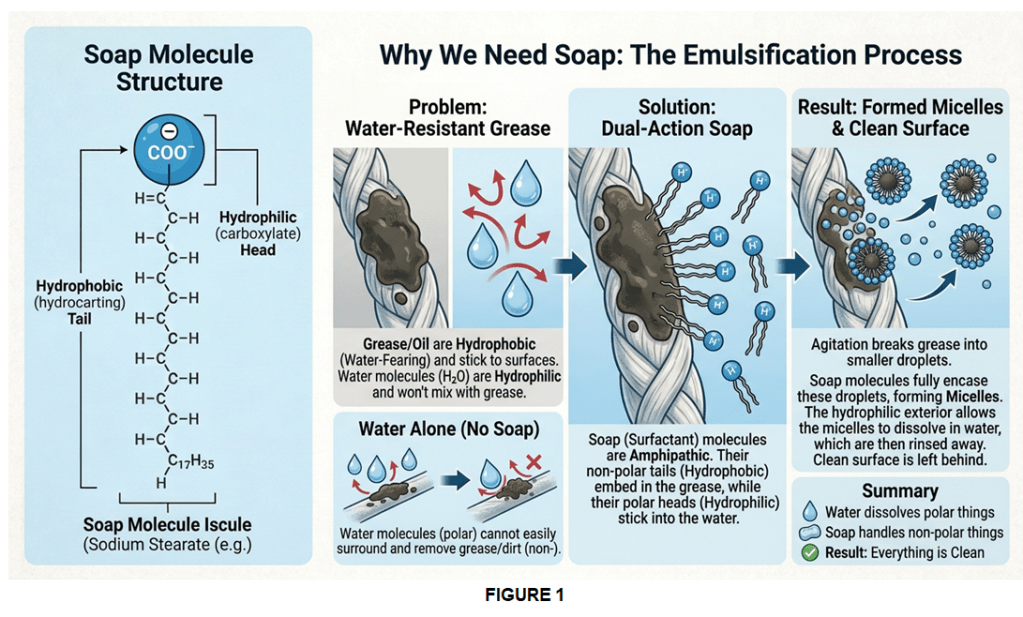
Water is the most abundant liquid substance on Earth. It is the substance that makes life possible and is THE Most powerful solvent we can possible get. Very few things don’t disolve in water, there are of course important exception but in most cases water is all what we need to heal and clean things. We are healthy if we drink water daily and wash our body regularly , we in general feel good when everything we touch is clean. However for effective cleaning we cannot use only water, we need SOAP too.
Throughout history, different cultures took very different stances on the use of soap. The Romans didn’t really use it, preferring to scrape off their sweat and dirt mechanically, and then bathe in first hot then cold water, to get clean. Their public baths were an important part of their culture, and relied on a sophisticated engineering infrastructure to provide hot and cold water. In Europe, after the Roman Empire collapsed, the infrastructure that kept the public baths going fell into ruin, and so bathing went out of fashion. In crowded cities and towns, without access to clean water, bathing was increasingly considered a health risk. During the Middle Ages, many Europeans believed that diseases were spread through miasma and bad air. They thought that washing, especially with hot water opened up the pores and made a person more susceptible to diseases, such as the bubonic plague, also known as the Black Death.
There was also a moral component associated with washing at this time, where to be holy like a hermit or saint involved rejection of comfort and luxury. Hence the more you smelt, the closer to God you might be perceived to be. These peculiar attitudes to cleanliness were not present in other parts of the world, and so visitors from the East would have found even the royal Europeans bewilderingly smelly and dirty, just as we would, looking at them from our modern vantage point. But the cultural norms of the past can often seem disgusting in hindsight. It wasn’t that long ago that smoking was quite normal, and the smell of smoke was pretty much everywhere, in offices, restaurants, bars and trains. There was at time when smoking was allowed even on aeroplanes. Now we look back with a mixture of horror and puzzlement as to how we got ourselves into that predicament. Seen in this light, the era of filthy, smelly Europeans is perhaps not so surprising.
As with smoking, the consequences of general uncleanliness were not just aesthetic. In the 19th century it was still normal practice for doctors to travel from bedside to bedside without changing their clothes or washing their hands after examining women during childbirth. This practice caused incredibly high rates of maternal and infant mortality during childbirth. In 1847 a Hungarian obstetrician, Ignaz Semmelweis, mandated that physicians scrub their hands with a chlorinated lime solution before touching patients, and saw the death rate fall from 20% to 1%. Despite this evidence, doctors were still reluctant to accept that they might be carrying infections on their hands, and transferring them to their patients, thus causing an enormous number of deaths. It wasn’t unti the 1850s when a British nurse, Florence Nightingale, took up her campaign for cleanliness that this attitude was really adopted, first in military hospitals, and then more widely. Crucially she gathered statistics and invented new types of mathematical charts to show her evidence to doctors and to the public, about the causes of disease and mortality. Gradually, as scientific evidence mounted, germ theory was accepted more generally by nurses and doctors, and hygienic washing with soaps are created equal, and soap’s new role in keeping people clean and healthy came at a time when industrialization and marketing were combining to create our modern Western consumerist culture. Soap was ready to transition from a commodity into a commercial product.
Nowadays, for instance one of the first things people notice about you is what you’re wearing. This doesn’t just mean the style and fit of your clothes, but also how clean and new or dirty and worn those clothes are. Because our clothes are so important to us, we put a lot of energy into keeping them clean.
Laundry powder was one of the first industrial products based on soap. Everyone had to wash clothes, and the growing importance of hygiene and cleanliness shaped attitudes towards social status in the 19th century: if you wore dirty clothes to a party, or to church, or to any other religious gathering, you were deemed not just poor and low, but increasingly you were also held to be immoral. No longer was it true that being smelly and dirty was a signifier of virtue. Germs and disease were now associates with unclean habits. So in 1885, when the Reverend Henry Ward Beecher declared that ‘Cleanliness is next to Godliness’, he was voicing a widely held belief that morality and spirituality had aphysical manifestation, and that soap was an indispensable aid to this higher status. At the same time, the spread of both railways and newspapers was bringing people together, making it possible to spread one message across a nation – soap brands were able to become national institutions.
In the USA Procter &Gamble (P&G) became the most powerful presence in the soap industry. Founded in Cincinnati in 1837 by two English immigrants, William Procter and James Gamble, Procter & Gamble was in the business of selling candles and soap, both made using tallow from the local meat industry. But as the 19th century progressed, the candle industry declined – 1st because of the popularity of whale oil and then because of kerosene – while the market for soap grew. P&G invented Ivory soap and invested large sums in marketing it across the whole country, placing adverts in national newspapers and magazines. Then with the invention of the radio in the 1920s, P&G started sponsoring serial dramas, which were mostly listened to by women, alone at home during the day, washing clothes and doing household cleaning; the dramas were very popular and ended up being named after the product that sponsored them – “soap operas”.
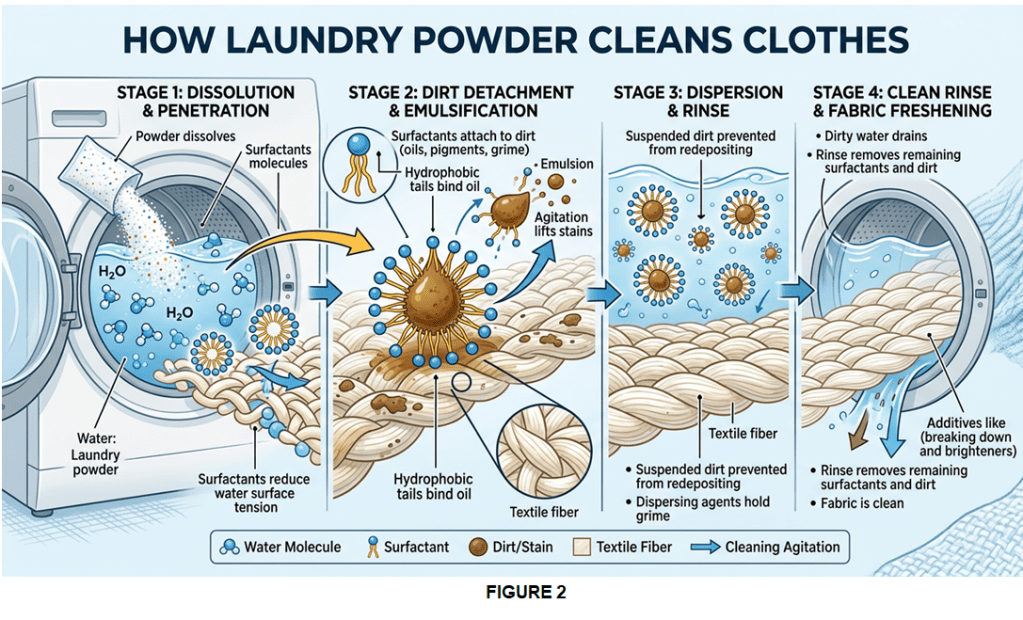
The invention of the washing machine liberated people – primarily women – from the demanding social ritual of washing clothes, and with it came a whole new set of substances to clean our dirty laundry. Soap, which had been the primary way to wash clothes for almost 5000 years, suddenly got a chemical upgrade; it became detergent.
Detergents are a cocktail of cleaning agents; they contain surfactants like soap, but also many other ingredients to make them more effective and less environmentally damaging. In soap, the charged, water-loving head of the molecule is attracted to the calcium in water, so if you live in a place that has hard water, the calcium will attach itself to the soap and form scum, just as it does on tea. Soap scum, though, looks slightly different – it’s the whitish substance you get on your hands when you wash them with a bar of soap. The scum isn’t just inconvenient; it also uses up the soap, so less of the bar is ultimately available for cleaning. It can also leave an unattractive grey residue on clothes.
What to do about soapy scum? – You have to make soap that’s less attracted to calcium. Chemists discovered a new set of molecules like soap, with a water-loving head and a fat-loving tail, but with these molecules they could carefully control the electric charges and make them less attractive to calcium: these were the new surfactants.
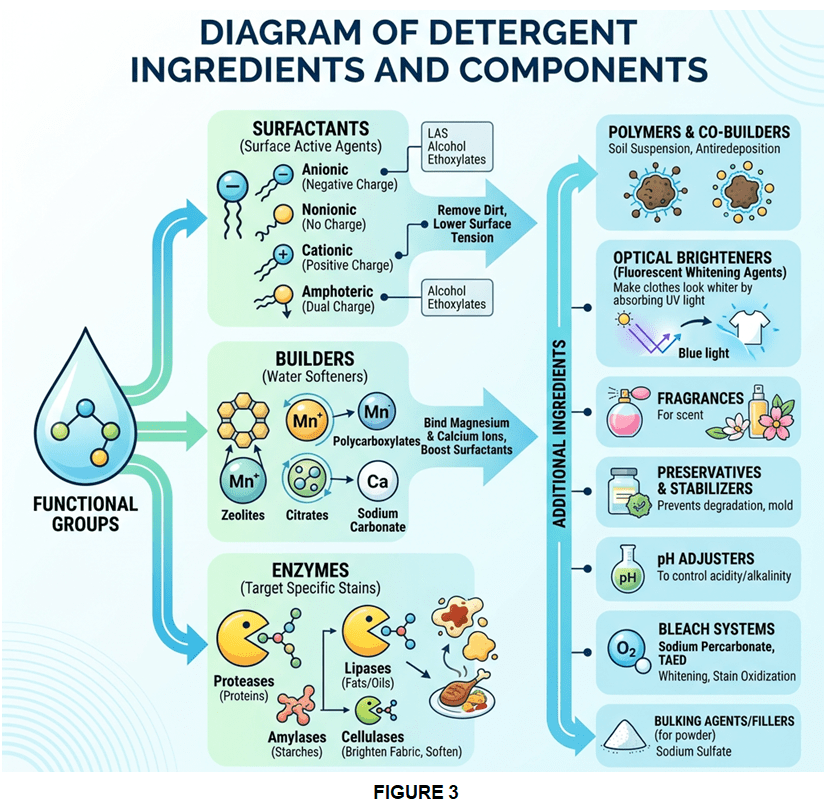
As demand for detergent grew, competition between manufactures became intense. Companies employed the best chemists they could find in the hope of creating better detergents. They developed detergents containing mild bleaches that could better preserve whites by reacting with the molecules responsible for brown stains, and snipping them up chemically. They also put fluorescent molecules into washing powder, called optical brighteners, that attach to the fibres of white clothes and stay there till after the wash.
Optical brighteners absorb invisible ultraviolet light, and emit blue light, giving fabric that “whiter than white” look that so many detergent companies advertise. You can see how they work if you go to a nightclub: the ultraviolet lights over the dance floor activate the fluorescent molecules in your white clothes making them glow.The range of surfactants expanded. Anionic surfactants (in which the water-loving head of the molecule is negatively charged as in soap) were created not just to avoid scrum formation and remove dirt, but also to keep dirt from redepositing itself on the clothes during the wash.
Cationic surfactants (in which the water-loving head of the molecule is positively charged) were developed as fabric conditioners. And non-ionic surfactants (in which the water-loving head of the molecule is neutral) remove dirt even at low temperatures, and are less foamy than most other surfactants. Avoiding foam is important; foam does not help to remove stains, and it is inconvenient for washing machines to fill up with foam, as it is hard to get rid of. In fact, detergents often contain antifoaming agents, to suppress bubble formation. Biological enzymes are added to most detergents in an effort to reduce the environmental impact of washing clothes. The enzymes help to chemically snip up the proteins and starches you’d find in stains. They’re able to remove stains at lower temperatures, which makes low-temperatur washing machines much more effective, thus saving energy and money. We call the enzymes biological because they’re derived from natural enzymes found in living systems that do a similar job of degrading and mopping up unwanted stuff in the body.
In Europe there are 2 kinds of laundry detergents: bio and non-bio. The bio-detergents contain enzymes, and while these clearly wash cleaner, the non-bio detergents are still available because of a persistent myth – that has never been verified – that bio-detergents cause skin irritation. And when we do the laudry we ca do it in 2 ways:
- Wet Cleaning, and
- Dry Cleaning
The most common way we clean our clothes and linens is wet cleaning or the use of water and some type of soap.
In contrast, dry cleaning uses chemicals or ultrasonic devices to loosen and remove dirt and stains without water.
While you’ll usually go to a professional dry cleaner shop for dry cleaning, you can do wet cleaning yourself at home or at a self-service laundromat. The washing machine itself has become a major part of setting up a home, and doing laundry is probably part of a regular routine for you and your family. Doing laundry has been a common household activity for years. Whether the technology was beating the garments on rocks by the river or pushing buttons on programmed washing machines this process depends on water and a mechanical action usually assisted by soap or an alkali.
The purpose of an alkali is to saponify the oils and dislodge ordinary soil and other matter. More often than not, the soapy agent holds soil in suspension as it becomes loose during the wash cycle, and is subsequently flushed away during the rinse cycle and centrifugal spin. The drying process for doing laundry at home is either hanging clothes on a clothesline or tumbling them in a gas- or electric-heated dryer.
However,, Wet cleaning is not machine washing. It is a professional cleaning method that uses water and biodegradable detergents in computer-controlled machines. Temperature, agitation, and moisture levels are regulated at a precision ordinary washing machines cannot reach. The method is gentler on natural fibres than solvent-based dry cleaning, kinder to the environment, and often more effective on water-soluble stains. Wet cleaning uses water as the cleaning agent rather than chemical solvents. The difference from home washing is control. Professional wet cleaning machines regulate every variable: water temperature to within a single degree, drum agitation speed and duration calibrated to fabric weight, detergent dosage matched to fibre type, and drying conditions set to prevent shrinkage. The detergents are biodegradable. The process produces no hazardous waste. Garments come back softer and fresher than solvent-cleaned equivalents, because no chemical residue remains in the fibre. Non-toxic garment cleaning at this level of precision is what distinguishes professional wet cleaning from any domestic alternative.
Dry cleaning on the other hand, is different. As I’ve already mentioned, It’s a process that cleans clothes without water. However, the cleaning fluid that is used is a liquid, and all garments are immersed and cleaned in a liquid solvent — the fact that there is no water is why the process is called “dry.”
We’ve come a long way in automating the chore of doing laundry. Patented in 1860, the Union Washing Machine consisted of a hand-cranked device that rubbed clothes between two washboards inside a bin of boiling water and soap. Two years later came the Union Wringer patent. The wringer attached to the washing machine as a means of wringing out clothes after the machine finished washing. This design was one of many similar inventions in the 19th century that people dubbed “washing machines” long before the use of electricity. Today’s washing machines work with the same principle as the originals: They loosen dirt from clothes and linens with soap and water, and then rinse and squeeze out as much water as possible. Modern washing machines, though, are almost completely automated. Electric motors have completed the hard work since the early 20th century, and there’s a good chance you’ve never used a washing machine without a built-in spin cycle.


Leave a Reply