
I am sure most people will say, what’s so much of science to make a good tea? Should not be a big deal, simply take a bag of tea or tea leafs and put it in a cup with boiled water, then add some sweetener and done. The tea is ready. Right?
Well… things are not that simple as they seem to be. On the contrary big chance that you will often end up making the vice-versa, namely a very bad tea. The author George Orwell, while most famous for classics of political fiction like “1984” and “Animal Farm”, cared so much about the problem of bad tea that he published a treatise on the drink: his 11 rules for making a perfect cup of tea.
These rules included the necessity of brewing tea using a teapot, the importance of warming the pot, and that milk should be added to the cup after the tea has been poured.
Science doesn’t offer a definitive view on what constitutes the perfect cup of tea, but does confirm the importance of some of Orwell’s insights. Basically, there are 4 key variables that can drastically alter the quality of a cup of tea:
- the tea leaves,
- the water quality,
- the temperature of the brew and
- the duration of the brewing process.
Based on these 4 basic variables ,Orwell made his list of 11 golden rules for brewing a great tea as follows:
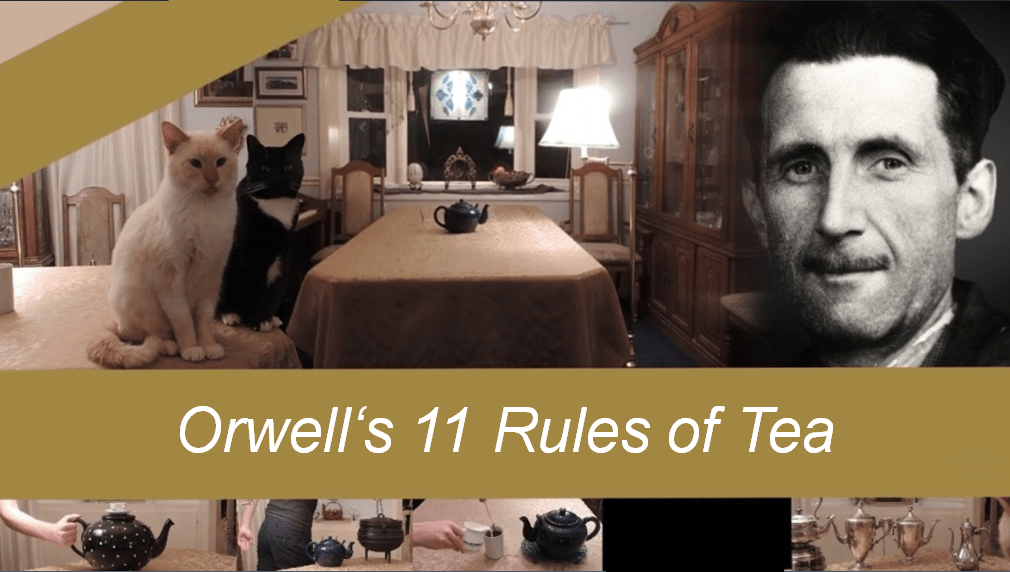
- RULE 1 = Tea should be from India or Ceylon
- RULE 2 = Tea should be brewed lightly in a porcelain or pottery teapot and mixed with boiling water in a cup
- RULE 3 = Tea should be warmed, not by using water, which spoils the taste, but on the shelf over the fire.
- RULE 4 = Tea must be strong.
- RULE 5 = Tea leaves should be placed directly in the teapot so that they can float freely and not in little bags, nets or packets.
- RULE 6 = The brew should be poured into the boiling water.
- RULE 7 = Having brewed the tea, it should be stirred or, even better, shaken.
- RULE 8 = Tea should be drunk from high cylindrical cups.
- RULE 9 = Cream should be removed from the milk before the milk is added to the tea.
- RULE 10 = First pour the tea and only then pour the milk.
- RULE 11 = Tea should be never be drunk with sugar, which spoils the taste.
The more flavourful the tea leaves are, the more flavourful a cup of tea. But there is a catch. If we agree, even if George Orwell does not, that the best tea is the tea you personally enjoy the most, then if your favourite tea is brewed from standard tea bags, it’s safe to say that you’re not going to find tea made from the extremely flavourful and extremely expensive Da Hong Pao tea more refreshing. The notion of what is best is, ultimately, subjective – just as it is with wine, and indeed with most things.
On the other hand, if you’ve never had the opportunity to drink a wide range of different teas (and there are approximately 1,000 types available) there may yet be a more satisfying type of tea out there for you.
Hence George Orwell’s insistence on using a teapot; the teapot isn’t just a brewing vessel, it’s a physical manifestation of the sharing at the heart of a home. When performing the tea welcoming ceremony you have to use good water. It sounds obvious, but it appears this variable has been overlooked even by Orwell, and given that tea is mostly water it’s easy to see how this ingredient would have a marked effect on the flavour. Water clearly tastes different depending on its source. It’s one thing to take water from your kitchen tap and another to take water directly from a spring in the middle of nature.You can use the same tea plant but only taking water from different source, the result will be completely different.
Caffeine for example, is a very bitter molecule and doesn’t dissolve easy in water. If you want a high-caffeine tea, then you should boil your water to higher temperatures, so more of it will dissolve in the brew. Fortunately, because black teas have been oxidized before use, they have a reduced number of tannins and polyphenols, which allows them to be brewed at higher temperatures without becoming excessively bitter, so you can have a highly caffeinated cup of tea that doesn’t make you wince.
It’s not just the initial temperature of the water that’s important for brewing tea. In order for the molecules responsible for taste and colour to dissolve successfully into the water, the leaves need to be in contact with the water for a specific duration of time. If the temperature of the water drops significantly during the brewing process, then fewer flavour molecules will be extracted. This will happen if you brew tea in a cold place, or if your brewing vessel is cold before you start steeping the tea, causing the hot water to drop in temperature as it warms the teapot. Hence George Orwell’s insistence that you warm the pot before making the tea (see RULE 2 in the Orwell’s list above). You can compensate for lower temperatures by brewing the tea for longer, but you won’t get quite the same ratios of salty, sweet, bitter, sour savoury and the thousands of individual volatiles that provide the complexity in a perfectly brewed cup.
George Orwell was in this camp, arguing that this allows you to add exactly the right amount of milk for your preferred level of creaminess. You might doubt whether adding the milk before or after makes any difference to the taste (RULE 10 in Orwell’s list) – it being such a subtle difference.
But in his book “The Design of Experiments”, Ronald Fisher investigated this question rigorously, inventing new statistical methods to do so. In his randomized tasting experiments, he found that, yes, people can taste the difference between adding milk before or after the tea. The methods described by Ronald Fisher revolutionized the mathematical discipline of statistics. It unfortunately did not revolutionize tea making in Britain, so even now if you order a cup of tea in a cafe, very rarely will they acknowledge that the sequence of milk and tea makes any difference to anyone. This drives me absolutely mad. So that’s why I prefer my tea as a simple cup without any milk. Maybe just with a piece of lemon in it and a little spoon of honey or brown sugar.
This is typically seen in the UK, where often, in a train station for instance, they just plonk a tea bag in a cup of hot water and immediately slosh in some milk. Then they hand it to you, as if to say, “I’ve added all the ingredients, so it must be tea.” “But, you haven’t asked me if I want the milk before or after, or if I actually want milk ”
I sometimes say when my inner rage boils over. Not that I actually want milk added before. I’m with George Orwell on this; In case I want the milk then I want to added after. But I still want them to ask me. And I’m pretty sure George Orwell would agree with me on this – the current trends represent the nadir of the tea-making tradition in Britain. It’s still the national drink, but coffee may well replace it if this continues, because, unlike tea, the quality of coffee served throughout the country has gone up in the last few decades, largely because of a single piece of engineering: the espresso machine.
If I would choose to make a tea I would sure consider the George Orwel tips but I would rather do it my way, as follows:
RULE 1 = Try Organic: Organic tea is better for you and better for the environment, offering all the deliciousness of your favorite tea grown without pesticides. Your body and taste buds will thank you for it.
RULE 2 = Measure Your Leaves: If you opt to use loose-leaf tea, keep a close eye on how much you should use. An 8-ounce cup of water typically needs 1-2 teaspoons of leaves, but it can vary depending on the type of tea you’re using. Read the label and measure accordingly.
RULE 3 = Use the Right Tools: Tea strainers and infusers are essential for loose-leaf tea drinkers. Strainers rest at the top of the mug for a simple steep, while infusers keep the leaves packed in a tea ball or creatively shaped container, typically made out of mesh or stainless.
RULE 4 = Watch the Water: Make sure to use cold, filtered water when brewing your tea. Also, for best results, don’t re-boil old water. Start fresh every time.
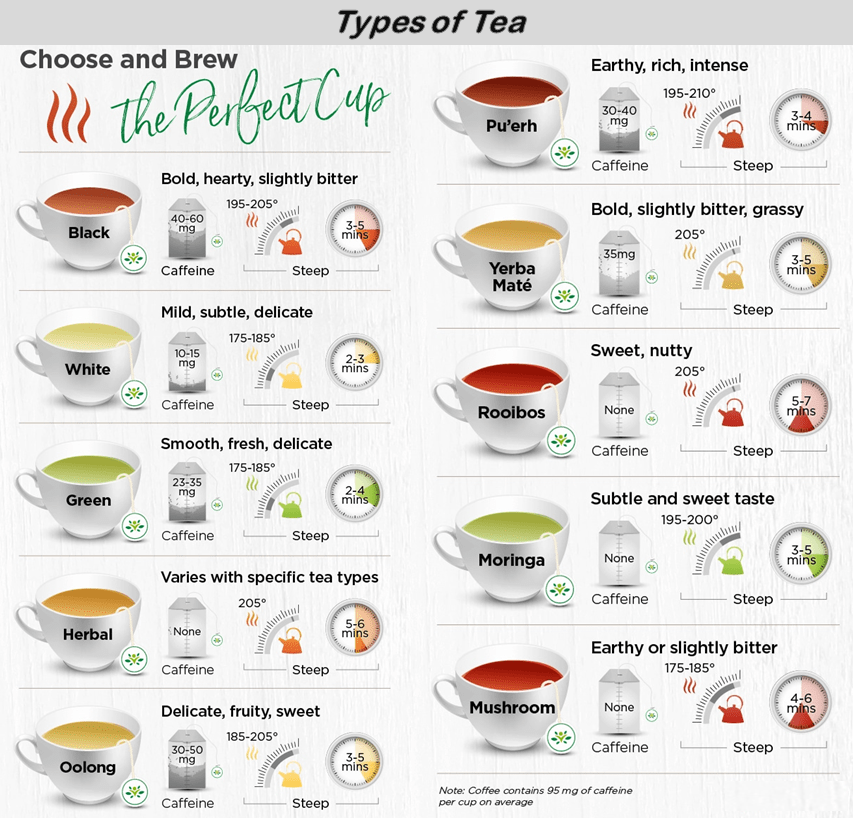
RULE 5 = Temperature Is Key: Some teas need to be brewed/steeped at a boiling temperature while other flavors would be ruined at such high temperatures. Water used for making black, herbal, oolong, pu’erh, yerba maté and rooibos teas should be brought to a boil whereas green and white teas should not.
RULE 6 = Timing Matters: Most teas need to steep at least 3 minutes to obtain the right flavor. Over-steeping can cause some teas to taste bitter and undesirable. Herbal and rooibos teas need to steep the longest. As George Orwell said, “One strong cup of tea is better than 20 weak ones.”
RULE 7 = Consider Skipping the Milk: Tea enthusiasts argue the effect milk can have on a cup of tea. Milk proteins bind with the polyphenols (antioxidants) in tea and can, therefore, reduce the number of active antioxidants. If you insist on adding milk, wait until you’re about to consume it to ensure the highest possible amount of antioxidants. My personal philosophy is “when in doubt, leave it out”
RULE 8 = Add Flavor, Enhance the Benefit: Several tasty additions can go into your tea to boost flavor and benefit your health. A squeeze of lemon helps enhance tea’s antioxidant potential, thanks to vitamin C. This also works with orange or grapefruit. Also, not all additions are the same. For example, lemon goes well with white tea, while oolong and herbal teas are delicious when sweetened with honey or agave. The most popular additions to tea include agave, honey, lemon, basil, ginger, cayenne pepper, cinnamon, mint leaves, peppermint oil, lavender oil and coconut oil.
RULE 9 = Reduce, Reuse, Re-Steep: Save your leaves! Some loose-leaf teas can be re-steeped a number of times. Rooibos and herbal teas can be re-steeped an extra 1-3 times; 2-5 times for green, black, white, oolong and yerba mate; and go big with pu-erh for up to 10 additional re-steeps.
RULE 10 = Store Correctly: Find an airtight container to store your teas in. Keep the tea store in a cool, dark place away from sunlight, like a pantry shelf or drawer. The heat from sunlight can change the tea’s flavor over time. Also, be sure to keep your tea away from food with strong aromas such as cheese, onions, spices and other pungent items.
And that was another way of doing a good tea.
Enjoy your tea always freshly made!!:-)
 Computer Aided Design & The 118 Elements
Your post is awesome too. I love it. Your tips are definitely valuable, for sure I will try all these. Thank you so much.
LikeLike