
When we eat things such fruits and vegetables, except that sometimes we cook them before eating, we usually consume these things without much technical preparation. Especially fruits, we just wash them a little bit before eating and that’s it, we consume them in their natural raw state. The food we cook the most is meat and other animal products (such as eggs, milk, cheese). But cooking meat also doesn’t require much expertise. I am sure anyone knows how to make at least a barbecue, an omelet or how warm a cup of milk. Basic things about food are always simple for anyone. Of course, if you are highly passionate about cooking then you can make an art from it and prepare culinary masterpieces.
Yet… things are completely different when we talk about Chocolate. It’s getting more complicated to make a good chocolate. One huge difference is that Chocolate is not FOOD. To make a good one, You must consider very important aspects of materials science and chemistry because Chocolate is exactly this: A MATERIAL. And it’s delicious.
Besides this, Cooked Chocolate tastes different from Eating Chocolate for multiple reasons. Although basic taste is general on the tongue by the taste buds, which distinguish between bitter, sweet, salty, sour and umami (meaty or savoury), most flavour is experienced through smell. It is the smell of chocolate from within your own mouth that is responsible for its complex taste.
When you cook chocolate, many of its flavour molecules evaporate or are destroyed by the cooking. This is a problem not just for hot chocolate but also for coffee and tea. It is why you need to drink those drinks within minutes of being brewed, otherwise the flavour disappears into the air. It is also why you lose much of your sense of taste when you have a cold cup – because the smell receptors in the nose are covered by mucus.The genius of creating hot chocolate in the mouth is that the cocoa butter encapsulates the flavour molecules until the moment that you eat it, and only then does it release its cocktail of more than 600 exotic molecules into your mouth and up your nose.
Some of the first flavours that you detect up your nose are fruity ones belonging to the “ester” family of molecules. These molecules are responsible for the ripe smell of beer, wine and more obviously, fruits. But these esters are not present in the raw cocoa bean. I know this because myself I have eaten a raw cocoa bean and it tastes horrible: it is fibrous, woody, bitter and bland; there is no fruitiness, no hint of a chocolate taste, and certainly no reason to taste one again. It takes quite a bit of engineering to turn these rather exotic-looking but dull-tasting beans into chocolate. So much so, in fact, that it gets you wondering how it was ever invented at all.
There are plenty of people, including myself, who are addicted to eating chocolate, and the reason may not just be its taste. it also contains psychoactive ingredients. The most familiar one is caffeine, which is present in small proportions in the cocoa bean, and so ends up in the chocolate via the cocoa powder.
The other psychoactive ingredient is theobromine, which is a stimulant and antioxidant, like caffeine, but is also highly toxic to dogs: many dogs die every year from eating chocolate, mainly around Easter and Christmas. Theobromine’s effect on humans appears to be much milder, and the stimulant levels in chocolate are small when compared to coffee and tea, so even if you eat a dozen chocolate bars every day, it is only equivalent to drinking one or two cups of strong coffee.
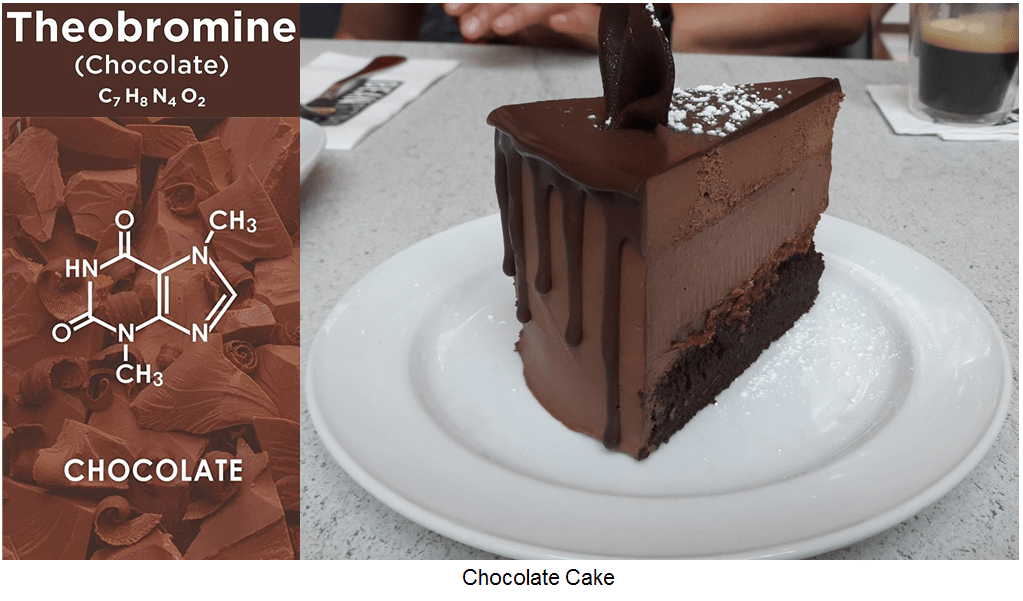
Chocolate also contains cannabinoids, which are the chemicals responsible for the high experienced from smoking dope. But again the percentage are tiny, and when blind taste studies were carried out to analyze chocolate cravings, researches found little evidence that any of these chemicals were linked to feelings of craving. This leaves another possibility to explain chocolate addiction that rather than its being a chemical effect, it may be that the sensory experience of eating chocolate is itself addictive.
Chocolate is like no other food. When chocolate melts in the mouth it suddenly releases a wild and complex, sweet and bitter cocktail of flavours within a warm rich liquid. It is not just a flavour but an entire oral experience. It is soothing and comforting, but it’s also exciting and – not to put too fine a point on it – seems to satisfy more than a physical hunger. Some say that eating chocolate is better than kissing, and scientists have dutifully tested this hypothesis by carrying out a set of experiments.
In 2007, a team led by Dr. David Lewis recruited pairs of passionate lovers, whose brain activity and heart rate were monitored first while they kissed each other and then while they ate chocolate (separately). The researchers found that although kissing set the heart pounding, the effect did not last as long as when the participants ate chocolate. The study also showed that when the chocolate started melting, all regions of the brain received a boost far more intense and longer lasting than the brain activity measured while kissing. Although this is just a single study, it does give credibility to the hypothesis that for many the sensory experience of eating chocolate is better than kissing.
This association of chocolate with extreme sensory pleasure has been energetically promoted by chocolate manufacturers, most notably, perhaps, in the long-running television adverts for Cadbury’s Flake. These adverts, which began in the late 1950s but continue to this day, always feature a woman relaxing on her own while indulging in the secret pleasure of eating a Flake.

The shape and size of this rod-like chocolate, and the suggestive manner in which the women indulged in it, were enough to send waves of outrage and alarm through the viewing public, despite the fact that the adverts never showed any nudity (merely implying it). It was after all, an exercise wholly in suggestion.
Indeed, a search on YouTube, where the original adverts have been uploaded, shows that the early versions were far more suggestive than recent ones. But while the call to censor these adverts was successful, their essential message has remained, and it does seem to resonate with the public, perhaps even pointing to a genuine truth about chocolate: for many, it is better than sex.
In a list of the countries with the highest consumption of chocolate, Switzerland comes top, followed by Austria, Ireland, Germany, Belgium and Norway. In fact, 16 of the 20 countries with the highest chocolate consumption are Northern European. (In America, chocolate is more popular as a flavour than as a bar, with more than half the population saying they preferred chocolate drinks, cakes, biscuits than any other flavour.) Given the reputation of chocolate as a substitute for sex, it is tempting to draw all sorts of cultural conclusions from this correlation. But there is another possible explanation for the high chocolate consumption in these countries, which is also associated with temperature.
In order to transform from a solid to a liquid easily within the mouth, chocolate requires a fairly cool ambient temperature. In a climate that is too warm, chocolate will either melt on the shelf or need to be put in the fridge, which defeats the purpose entirely – cold chocolate gets swallowed before it’s had a chance to melt. (This problem may explain, perhaps, why the Meso-Americans, who first invented chocolate in the tropics, never created a solid bar but consumed in only as a drink.) Moreover if solid chocolate is exposed to temperature above 20°C, as a result perhaps of being left in the sun or in a hot car, it undergoes fundamental changes of structure. The changes can be spotted immediately because they result in “bloom”: fat and sugars migrate to the surface of the chocolate and form a whitish crystalline powder, often with a river mark pattern.
As well as pure pleasure, chocolate’s high sugar content and the perceived stimulating effects of the caffeine and theobromine have carved out another role for chocolate, encapsulated by the slogan “A Mars a day helps you work, rest and play” or it’s French equivalent: “Un coup de barre? Mars et ça repart!” (“Feeling beat? A Mars and you’re off again!); or its German one: “Nimm Mars, gib Gas” (“Take Mars, step on the gas”). With an average chocolate bar containing more than 50% sugar and 30% fat, it clearly offers a concentrated source of energy and an instant lift. For these same reasons, though, the healthiness of chocolate-rich diets has been called into question.
The 1st thing to note is that cocoa butter is a saturated fat, which is a class of fat associated with the increased risk of heart disease. Further investigation into how the body digests this fat has shown, however, that it tends to convert this fat into an unsaturated fat, which is thought to be benign. Meanwhile, the cocoa particles contain an enormous range of antioxidants, and no one really knows what they get up in the body.
However controlled studies by Harvard University have shown that the regular consumption of a small amount of dark chocolate leads to an increased life expectancy (as compared to the consumption of no chocolate at all). No one knows why, and further studies are ongoing. Of course if the craving for chocolate becomes too much, any benefits will be offset by weight gain. At the moment, the jury is still out, but leaving aside over-consumption, chocolate is no longer seen as damaging to our health and perhaps even as beneficial.
For all these reasons, although we are a long way from doctors prescribing chocolate or children being given it as part of a school diet, chocolate is an integral item in many countries’ standard military rations: it provides a sugar boost for energy, caffeine and theobromine for brain stimulation, and fats to replenish those lost during extreme exercise, and it has a shelf life of several years. Finally, but most controversially, it also may stave off feeling of sexual frustration.
Chocolate is one of our greatest engineering creations. It is certainly no less remarkable and technically sophisticated than concrete or steel. Through sheer ingenuity, we have found a way to turn an unpromising tropical rainforest nut that tastes revolting into a cold, dark, brittle solid designed for one purpose only: to melt in your mouth, flood your senses with warm, fragrant, bitter-sweet flavours and ignite the pleasure centers of the brain. Despite our scientific understanding, word or formulae are not enough to describe it. It is as close as we get, I would say, to a material poem, as complex and beautiful as a sonnet. Which is why the Linnaean name for the stuff, theobroma, is so appropriate. It means “the food of the gods”.
 Computer Aided Design & The 118 Elements
Leave a comment