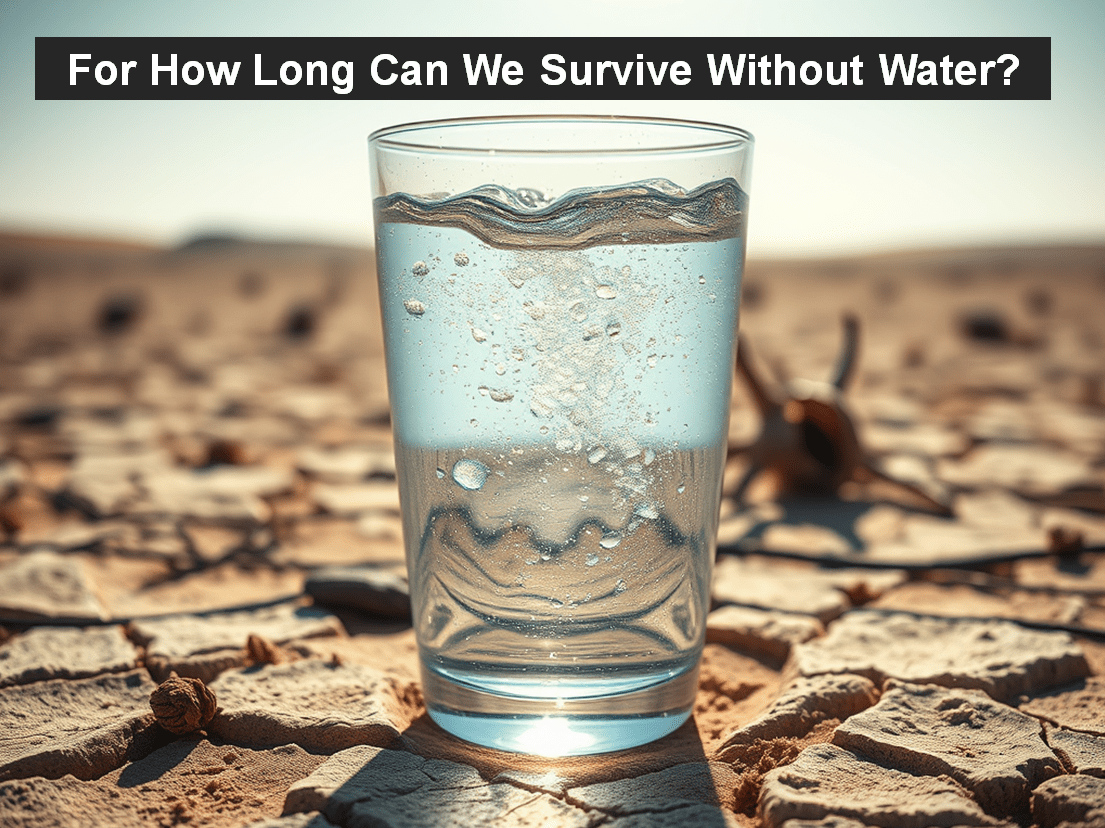
Although water molecules are simple have a simple structure, technically such a molecule is made of 2 atoms of Hydrogen and 1 of Oxygen, the outcome being a substance noted as H2O, the physical and chemical properties of water are extraordinarily complicated. It’s not a secret for anyone that without water you won’t live long. With other words WATER is the substance essential for life.
How Long Can You Live Without Water?
Well …for sure you won’t die immediately, but proper hydration is essential to your survival. The reason for this is that your body needs to consume a significant amount of water each day to function properly. This is because you constantly excrete water through sweat and urination, so your body needs to replenish the lost fluids. So definitely you won’t survive for long without consuming a healthy amount of water. The general consensus is that people can survive for around 3 days without water, with estimates typically ranging from 2 days to a week.
Wilderness guides often refer to the “rule of 3”, which says that:
”a person can live for 3 minutes without air (oxygen), 3 days without water, and 3 weeks without food.”
You may be susceptible to the effects of dehydration even sooner, depending on certain factors. Multiple studies on this matter have repeatedly confirmed that without water, a person could die after 3 days, and usually no one can survive for more than 5-6 days. For as far as I know the world record for the longest survival time without water and food is 18 days, achieved by an 18-year-old man in Austria who was accidentally locked in a government facility in 1979. He was in a near-death state when he was discovered.
Of course these numbers only serve as a general guide. However, many different factors affect the length of time someone can survive without water, including the environment, level of activity, age, health status, and other unique individual characteristics. While food we consume also contains some water, the amount depends on the type of food, surviving without water generally refers to not drinking water or other beverages.
HOW much Water should we drink and WHY?
Being attentive to the amount of water you drink each day is important for optimal health. Most people drink when they’re thirsty, which helps regulate daily water intake. But according to the National Academies of Sciences, Engineering and Medicine (NASEM) organization in the USA, the general water intake (from all beverages and foods) that meet most people’s needs are:
- about 15.5 cups of water about 3.7 liters (125 ounces) each day for men
- about 11.5 cups 2.7 liters (91 ounces) daily for women
People get about 20% of their daily water intake from food. The rest is dependent on drinking water and water-based beverages. So, ideally men would consume about 3 liters (100 ounces) of water from beverages, and women, about 2.12 liters (73 ounces) from beverages.You’ll have to increase your water intake if you’re exercising or living in a hotter region to avoid dehydration. Other ways to assess hydration include your thirst and the color of your urine. Feeling thirsty indicates your body is not receiving adequate hydration. Urine that is dark or colored indicates dehydration. Pale or non-colored urine typically indicates proper hydration.
WHY is so important to drink WATER up constantly?
Here is why: Simply because WATER is a substance that makes up a majority (as 60 to 70 %) of your body weight and is involved in many important functions, including the following 3:
- flushing out waste from your body
- regulating body temperature
- helping your brain function

You get most of your water from drinking beverages, but food also contributes a small amount to your daily water intake. I can think of various reasons WHY you must drink up water regularly. Here are at least 10 reasons of why is important to drink water daily and what WATER can do for you, these are as follows:
1 – IT HELPS CREATE SALIVA – Water is a main component of saliva. Saliva also includes small amounts of electrolytes, mucus, and enzymes. It’s essential for breaking down solid food and keeping your mouth healthy. Your body generally produces enough saliva with regular fluid intake. However, your saliva production may decrease as a result of age or certain medications or therapies. If your mouth is drier than usual and increasing your water intake isn’t helping, see your doctor.
2 – IT REGULATES YOUR BODY TEMPERATURE – Staying hydrated is crucial to maintaining your body temperature. Your body loses water through sweat during physical activity and in hot environments. Your sweat keeps your body cool, but your body temperature will rise if you don’t replenish the water you lose. That’s because your body loses electrolytes and plasma when it’s dehydrated. If you’re sweating more than usual, make sure you drink plenty of water to avoid dehydration.
3 – IT PROTECTS YOUR TISSUES, SPINAL CORD AND JOINTS – Water consumption helps lubricate and cushion your joints, spinal cord and tissues. This will help you enjoy physical activity and lessen discomfort caused by conditions like arthritis.
4 – IT HELPS EXCRETE WASTE THROUGH PERSPIRATION, URINATION AND DEFECATION – Your body uses water to sweat, urinate, and have bowel movements. Sweat regulates body temperature when you’re exercising or in warm temperatures. You need water to replenish the lost fluid from sweat. You also need enough water in your system to have healthy stool and avoid constipation. Your kidneys are also important for filtering out waste through urination. Adequate water intake helps your kidneys work more efficiently and helps to prevent kidney stones.
5 – IT HELPS MAXIMIZE PHYSICAL PERFORMANCE – Drinking plenty of water during physical activity is essential. Athletes may perspire up to 6-10% of body weight during physical activity. Hydration also affects your strength, power, and endurance. You may be more susceptible to the effects of dehydration if you’re participating in endurance training or high-intensity sports such as basketball. Negative effects of exercise in the heat without enough water can include serious medical conditions, like decreased blood pressure and hyperthermia. Extreme dehydration can cause seizures and even death.
6 – IT AIDS IN DIGESTION – Contrary to what some believe, experts confirm that drinking water before, during, and after a meal will help your body break down the food you eat more easily. This will help you digest food more effectively and get the most out of your meals. Research shows that the body adapts to changes in the consistency of food and stomach contents, whether more solid or more liquid.
7 – IT HELPS WITH NUTRIENT ABSORPTION – In addition to helping with food breakdown, water also helps dissolve vitamins, minerals, and other nutrients from your food. It then delivers these vitamin components to the rest of your body for use.
8 – IT HELPS IMPROVE MOOD – Not getting enough water can also affect your mood. Dehydration may result in fatigue and confusion as well as anxiety.
9 – IT IMPROVES BLOOD OXYGEN CIRCULATION – Water carries helpful nutrients and oxygen to your entire body. Reaching your daily water intake will improve your circulation and have a positive impact on your overall health.
10 – IT AIDS IN COGNITIVE FUNCTION – Proper hydration is key to staying in tip-top cognitive shape. Research indicates that not drinking enough water can negatively impact your focus, alertness, and short-term memory.
+++++++++++++++++++++++++++++++++++++++++++
The bottom line – Water is important to nearly every part of your body. Not only will hitting your daily recommended intake help you maintain your current state of being, it may even improve your overall health. However the first thing to consider before to drink your daily need of water is to make sure that the water you drink is safe. This is however hard to check 100% but at least you can count on the bottled water versus the one from the tap for example. Anyway, bottled water can also be different but at least you can read the label and see what’s its composition. It is also important to be aware of the recommended water amount to be consumed. Neither too little nor too much water is ideal for the body, and it is a good idea to avoid the extremes of both situations.
Are there any negative effects of drinking too much Water?
The answer is YES. Water intoxication happens when too much water is consumed, leading to decreased concentration of sodium in the body (hyponatremia). The normal level of sodium in the blood is around 135-145 mEq/L (milliequivalents per liter). During hyponatremia, this level is lower. Therefore unlike water restriction, excess water leads to a different set of health problems. Hyponatremia symptoms can range from mild to severe and could be even fatal. For instance the effects of drinking too much water include:
- mild issues – such as excessive urination,confusion and tiredness,
- moderate issues – such as vomiting, muscle weakness and cramps,
- severe issues – such as seizures or brain swelling that could lead to coma or if there is a quick short-term case of severe water intoxication the result can be fatal.
In the medical community it is largely acknowledged that overhydration can be just as dangerous as dehydration. This is why it is important to drink the proper amount of water daily to avoid any adverse health problems.
 Computer Aided Design & The 118 Elements
Leave a comment