After, Water and Tea, the 3rd one most consumed refreshment drink must be the COFFEE. At some point I am tempted to put coffee in the same position with tea as both being the 2nd most consumed drinks on the planet, but I guess Tea better deserves the 2nd place. Like Tea, making a good coffee is also an Art. You must know how to make a good one.
Well… in my case actually to be honest I am still learning, but so far I’ve made a little progress and below I want to share with you some very important observations I made and my favorite rules how to make a delicious coffee.
Now the easiest and fastest way to prepare you cup of coffee, is to buy grinded coffee beans, put it in your coffee espresso, boil the water and done. But that’s not really the best way to make a good coffee. Instead you can roast your own coffee beans if you want; Myself I did it in the past and I confirm it is really a big difference versus grinded coffee from supermarket.
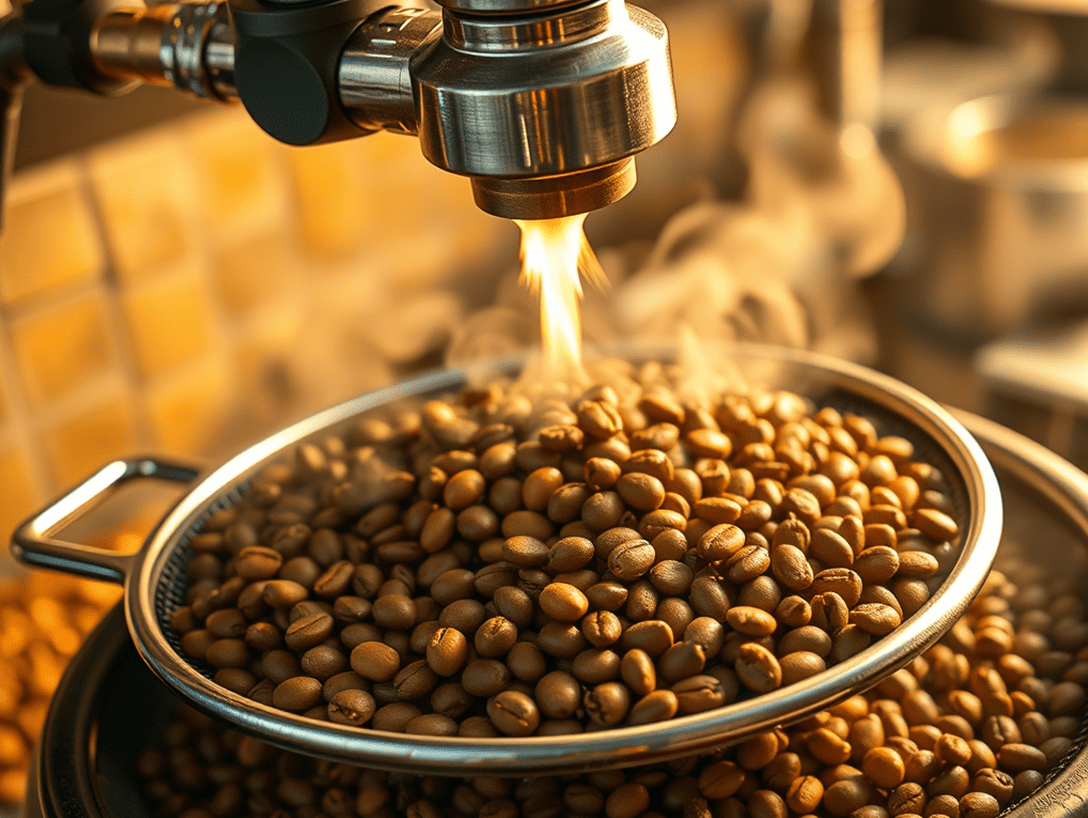
Here is what I did: I bought raw coffee beans from my local coffee supplier, I put them into a stainless-steel sieve, and I held a hot-air gun over them for a while, constantly shaking the sieve. In this way I was able to roast enough beans to make a cup of coffee in about 5 minutes. If you love coffee, you should really give it a go; you’ll learn so much about it.
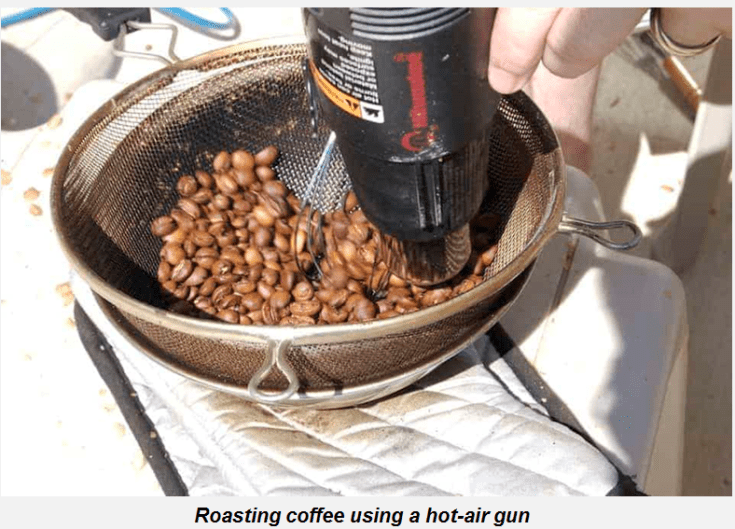
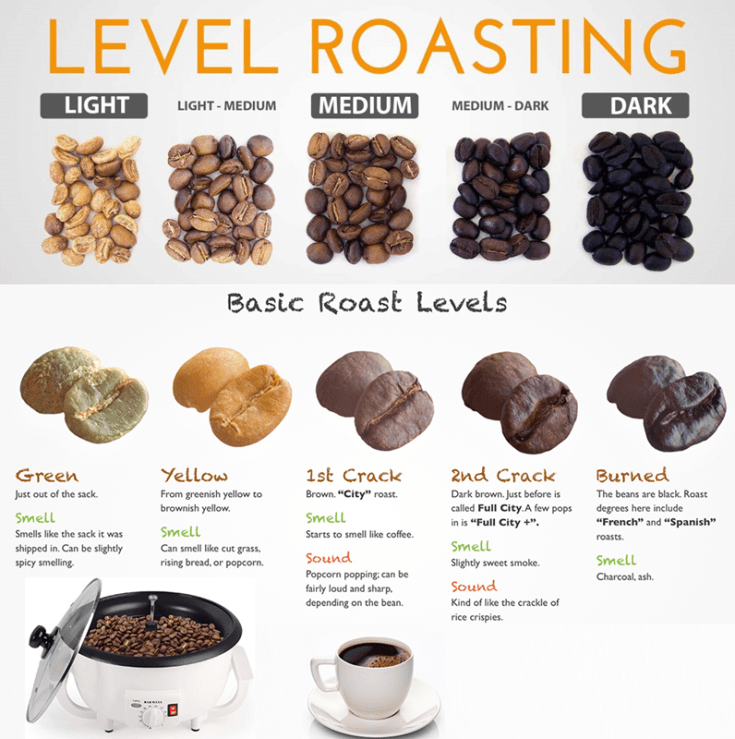
In case you want to experience this yourself, the first thing you’ll notice as you heat up the beans is their changing colour. They’ll turn yellow first, as the sugars inside the bean begin to caramelize. Then, as the temperature increases, the water inside the bean starts to boil, and pressure from the steam starts to build up; you’ll know this is happening when you hear the beans cracking open under pressure. As you heat them still more, the molecular constituents of the bean start to fall apart, but they also react with each other. This is a very different way of using heat compared to the manufacture of tea leaves.
There, heat is used mostly to stop chemical reactions, while with coffee it’s the roasting that starts the chemical reactions which produce most of the flavour. . One of the most important reactions occurs between the bean’s proteins and its carbohydrates. This is called the Mailard reaction and it happens when the bean reaches between 160°C and 220°C.
The Maillard reaction produces a vast array of flavour molecules; when it starts you can immediately smell them – this is when your beans get that characteristic coffee aroma, as well as many of their savoury qualities, it’s the same chemical reaction that makes the delicious crust when you’re baking bread, and the tasty crispy outer layer on a steak, if you’re roasting or frying the meat. The reaction changes the colour of the bean from yellow to brown, and produces carbon dioxide gas, which will eventually go on to produce the cream foam that sits on top of a cup of coffee. At this point you’ll hear crackling from the beans, as their inner structure ruptures, a result of the gas building up inside them, causing them to swell in size.
If you keep roasting the beans, you’ll start to see them turn a very dark brown as the acid and tannins break down, mellowing the flavour profile. Then you’ll hear a second crack as their interior structure becomes increasingly brittle and weak. You’ll observe small amounts of oil leaking on to the surface of the beans at this point, signaling the complete disintegration of the bean’s cellular structure. These oils, which make up approximately 15% of the bean, leave a glossiness on the surface that’s characteristic of a French roast. If you keep roasting past this point, you’ll get a shinier bean, but also a less tasty one; the high temperatures break down the molecules into smaller structures that produce less flavour. You’ll also lose a lot of the soluble carbohydrates, which are responsible for the syrupy mouth-feel of the coffee. In general, the blacker the beans, the more generic and simplistic the flavour profile.
When you roast your own beans, you can play around with the flavour profiles as much as you want, until you find a style that perfectly suits your palate. From personal experience, I can say that doing it myself gave me a deep respect for coffee manufacturers; even with two apparently simple variables – temperature and duration of the roast – you can create an enormous range of flavours with the same beans. Once you’ve roasted the beans, you’ve got to extract all of their flavour and get it into your cup.
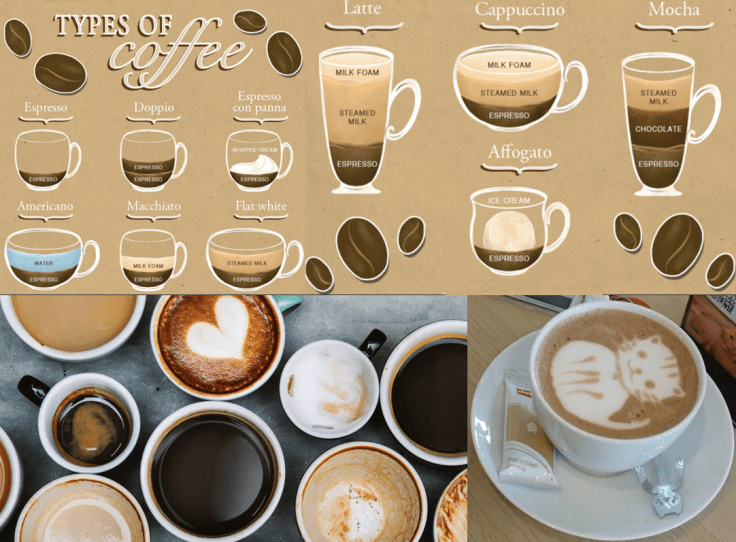
Having observed and tasted different coffee types like the ones shown above I have now learned that the following 9 rules to make a good coffee can give excellent results. I agree that there are no definitive 100% objective guideline about how to make a delicious coffee, but however I would recommend you to follow the next 9 important rules:
RULE 1 = BUY FRESH BEANS
Without question, coffee is best when used within days of being roasted. Buying from a local roaster (but you can roast coffee yourself) is the surest way to get the absolute freshest beans. Be wary of buying bulk coffee from supermarket display bins. Oxygen and bright light are the worst flavor busters for roasted beans, so unless the store is conscientious about selling fresh coffee, the storage tubes get coated with coffee oils, which turn rancid. Coffee beans packaged by quality-conscious roasters and sold in sturdy, vacuum-sealed bags are often a better bet.
RULE 2 = KEEP COFFEE BEANS FRESH
Always store opened coffee beans in an airtight container. Glass canning jars or ceramic storage crocks with rubber-gasket seals are good choices. Never refrigerate (roasted beans are porous and readily take up moisture and food odors). Flavor experts strongly advise against ever freezing coffee, especially dark roasts. Optimally, buy a five- to seven-day supply of fresh beans at a time and keep them at room temperature.
RULE 3 = CHOOSE GOOD COFFEE IF IT’S WITHIN YOUR BUDGET
Snobbism among coffee drinkers can rival that of wine drinkers, but the fact is that an astonishing world of coffee tastes awaits anyone willing to venture beyond mass-marketed commercial brands. Specialty coffees that clearly state the country, region or estate of origin can provide a lifetime of tasting experiences. There are two major beans on the market–Arabica and Robusta. Arabica beans are more widely produced, have a wider range of flavors and are generally considered the “better bean.” By all means, look for 100% pure Arabica beans. The cheap alternatives may contain Robusta beans, noted for their higher caffeine content but harsh flavors. “Nasty” is a term commonly linked to Robusta coffees by Arabica devotees. But these types of coffee can be expensive. If your barista budget has taken a hit, there are plenty of good grocery store brands that deliver your morning buzz at half the price of fancy beans.
RULE 4 = GRIND YOUR OWN
Coffee starts losing quality almost immediately upon grinding. The best-tasting brews are made from beans ground just before brewing. Coffee connoisseurs prefer to grind in expensive burr mills, but affordable electric “whirly blade” grinders like Bodum will do a serviceable job, especially if the mill is rocked during grinding to get a fine, even particle size. Scoop for scoop, finer grinds yield more flavor.
RULE 5 = USE GOOD QUALITY WATER
Nothing can ruin a pot of coffee more surely than tap water with chlorine or off-flavors. Serious coffee lovers use bottled spring water or activated charcoal/carbon filters on their taps.
Note: Softened or distilled water makes terrible coffee–the minerals in good water are essential.
RULE 6 = AVOID CHEAP FILTERS
Bargain-priced paper coffee filters yield inferior coffee, according to the experts. Look for “oxygen-bleached” or “dioxin-free” paper filters (e.g., Filtropa, Melitta). Alternatively, you may wish to invest in a long-lived gold-plated filter (e.g., SwissGold). These are reputed to deliver maximum flavor, but may let sediment through if the coffee is ground too finely.
RULE 7 = DON’T SKIMP ON THE COFFEE
The standard measure for brewing coffee of proper strength is 2 level tablespoons per 180ml cup or about 2 3/4 tablespoons per 240ml cup. Tricks like using less coffee and hotter water to extract more cups per pound tend to make for bitter brews.
RULE 8 = BEWARE THE HEAT
Water that is too hot will extract compounds in the coffee that are bitter rather than pleasant. The proper water temperature for brewing is 90°C, or about 45 seconds off a full boil. (Most good coffee makers regulate this automatically.) Once brewed, don’t expect coffee to hold its best flavors for long. Reheating, boiling or prolonged holding on a warming platform will turn even the best coffee bitter and foul-tasting.
RULE 9 = KEEP YOUR EQUIPMENT CLEAN
Clean storage containers and grinders every few weeks to remove any oily buildup. At least monthly, run a strong solution of vinegar or specialty coffee-equipment cleaner like Urnex through your coffee maker to dissolve away any mineral deposits. Rinse thoroughly before reuse.
 Computer Aided Design & The 118 Elements
Thanks a lot for taking the time to share these valuable insights. It’s always great to get fresh perspectives on important topics like this.
LikeLike