
Helium is something of a bizarre contradiction here on Earth. Although it’s the 2nd most abundant element in the universe as a whole, combining with hydrogen (the most abundant) to form an estimated 99% of all known matter that’s out there… helium is becoming increasingly rare on Earth. The main reason for that is because it’s currently an almost completely non-renewable resource. There are few aspects at play here, and I would mention 3 of the most important ones as follows:
1st. – Helium is an extremely light and totally inert element, helium atoms don’t bond naturally with others.This means that once helium gets released out into the atmosphere it just rises and rises and rises…until it escapes Earth entirely and siphons off into space, lost forever. Clearly that’s not an ideal situation already if we’ve come to rely on steady helium supplies, which we’ve already done. And it’s made worse because to generate new helium is a slow and unlikely process, as well.
2nd – Helium is a non-renewable recourse – While much of the helium away from Earth forms inside of stars, where nuclear fusion creates it from hydrogen, the helium that’s present on Earth is buried deep below the surface of our planet. On Earth Helium is produced by natural decay of radioactive uranium (U) and thorium (Th), but this process takes billion of years to complete. Helium is currently collected from pockets of underground natural gas as a by-product of the natural gas extraction process. However because helium is so light any escaped gas – either from the containers or from the process itself – floats to the edge of out atmosphere, where it’s blown away from Earth by solar winds.This is also why helium is often described as a true, nonrenewable resource.
3rd – Helium requires strict geological condition – Lastly though while helium can be mined from the Earth crust, and even if that mining is done efficiently and its escape can be prevented, it takes a very particular series of geological conditions to do so. Two of them are:
- I- to trigger natural radioactive decay (and therefore create helium) in the first place;
- II- ensure that the helium that is created remains trapped under the ground at least long enough to be mined by us (rather than escaping of its own accord).
WHY IS HELIUM SUPPLY OF SUCH A BIG CONCERN?
It’s not easy at all to handle Helium on Earth. This stuff is volatile and as I’ve just mentioned above, it takes ages to form and the conditions for it to form are uncommon. Given all the requirements then it’s perhaps little surprise that the availability of helium has historically been quite unpredictable. But still why is this such a problem? Wouldn’t a helium shortage simply mean fewer balloons bouncing around the place?
Well… Yes it could mean fewer balloons, but the unique physical properties of helium mean that’s more than just a party gimmick. Among helium most interesting (and therefore most sought after) inherent properties are the fact that it’s the second lightest element (behind only hydrogen)… it isn’t flammable, like hydrogen is.

Likewise the arguable most importantly of all, is that Helium has the lowest boiling point of any element at -268,9°C this property making it an immensely effective cryogenic fluid (meaning that in liquid form it’s extremely cold which has important scientific applications). With this in mind, helium has come to be essential in labs today, and in specific pieces of lab equipment. Those cooling properties, which mean that liquid helium is almost as cold as outer space, are invaluable in the healthcare industry, for example where they’re made use of in MRI machines. Magnetic Resonance Imaging (MRI) works through superconductors coils, which create a strong magnetic field, but the science behind them is only possible if the coils are kept cool enough to host the electrical currents needed, which is where helium comes in. It’s been estimated that almost a 3rd of all helium used on Earth presently goes into powering MRIs in hospitals and labs all over the world. So it’s easy to see why a shortage is bad news given how crucial these machines have become to us. Helium saves lives.

Besides healthcare applications, other notable machines that use superconductivity (and therefore helium, and often lots of it) includes the Large Hadron Collider at CERN in Switzerland, which is famously employed to study particle physics and for that it needs around 120 metric tons of helium per week to keep it running. The Nuclear Magnetic Resonance spectroscopy (NMR) machines, which again are used to observe atomic nuclei in subatomic detail, need helium too. Studying particles in this way has become increasingly important for research in recent years, allowing scientists to understand more about how particle interactions work and to discover previously unknown particles that give us a better grasp of the universe. But this once again, it’s a field of research that relies on constant and reliable helium supplies. Even NASA and Space X need helium for their liquid fuel rockets.
Thanks to the difficulty in procuring helium then, the cost of it has tended to fluctuate, and sometimes severely placing yet more strain on research and healthcare. In some cases, it is possible to use a substitute with many labs reportedly trying to switch from helium to liquid nitrogen (N2) for some tasks which is more freely available and less expensive, although it doesn’t offer such low temperatures as helium does, and so it often still isn’t suitable (or possible) to completely switch to liquid nitrogen without damaging expensive equipment.
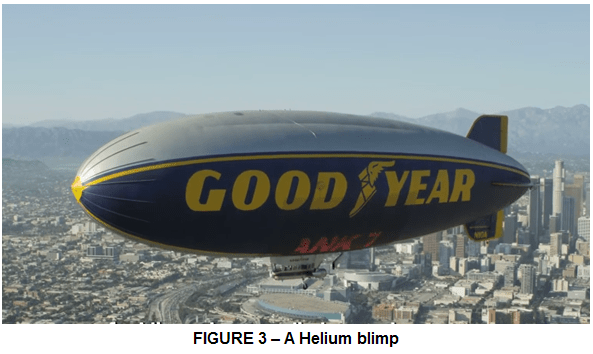
For decades before now the world has had the Federal Helium Reserve (in America) to fall back on. Established in the 1920s for blimps, FHR has supplied around 40% of the world’s helium.
Yet since its establishment, the helium stock at FHR has been gradually sold off over the years, and the reserve wound down operations across the early 2020s, creating again massive uncertainty for the future of this plant.
Except USA, other location on Earth that boast an abundance of buried helium are few and far between. However there are other notable helium hot spots, including in Tanzania, Algeria, Australia, Russia and Qatar but it remains to be seen quite how far these supplies will solve (or satisfy) increasing worldwide demand. Estimates vary as to just how much helium the world has left and how long it will last. In 2019 there was an estimate that the world had around 10 years of helium left unless more effort was put into recycling.Others suggest between 100-200 hundred years of helium usage. However regardless of the estimates, the knock on effects to industry could be huge. Not to mention the constant volatile nature of helium prices.
WHAT DOES THE FUTURE OF HELIUM LOOKS LIKE?
The increasing helium demand is amplified in part due to 2 growing industries that lean on the world’s helium deposits: space travel and quantum computing.
SpaceX & NASA for example have used helium to power many of its rockets, while the likes of Google have previously underlined how crucial the cryogenic qualities of helium are to maintaining the superconductors needed for the cutting-edge power of quantum computers.
Meanwhile even before all of the proposed near-future tech and gadgetry is taken into account, helium has continuously been used in the production of many of our more widespread devices, such as in some regular computers, cell phones and televisions.There’s no two ways about it. If we want out tech to continue to work, we either need to find more helium, or find something to adequately replace it.
In an alternate world, we could look out into the solar system (and into interstellar space) for answers. On massive enough planets including on the gas giants of Jupiter and Saturn, large amounts of helium remain trapped within the atmosphere by gravity. Then we might simply stop off at one of those worlds to top up our helium tanks, much as we do for gas to power cars, or we could (hypothetically speaking) pay a visit to the Sun where naturally there’s an almost bottomless supply of freshly fused helium just waiting for us to consume it.
There have been theories that we could one day mine Helium-3, an isotope of Helium on the lunar surface and even on Jupiter.On Earth the Helium we have is the stable of helium known as Helium-4 (4He) (with an atomic nucleus made of 2 protons and 2 neutrons), but 3He is also a stable isotope containing 2 protons and 1 neutron. Which makes it attractive for use in potential fusion reactors. While the element 3He is abundant on the Moon it still resides within the moon’s soil, extracting it would require a process of scooping it up and then separating into the useful elements and then storing it for later use, Therefore even to mine 3He on the Moon that would take a considerable amount of resources to do so. Hence practically in the real world, all these ideas are hardly serious options.
In this case despite all the leaps forward we’ve made in recent decades, scientists, researchers, medical professionals, technical advisors and many more besides find themselves in something of a quandary. Helium is needed. Helium is rare. And helium is apparently running out.
So what’s the verdict? = At this point it’s really hard to say, while we all love the idea of fusion energy and certainly hope to see it realized, eventually our planet is in a really precarious position right now. While a 3He reactor could hold loads of major potential we’re going to have to see major strides in both nuclear fusion and space mining and refining infrastructure before it actually ever truly be realized. Even when times are good- say a brand-new resource is tapped that solves all our problems in the short term – there is always remains the specter of eventual failure looming over us. And if a work around can’t be found, whole industries might be faced with crippling shortages in their supply line, causing knock on effects throughout society. Hospitals could face growing pressure, labs could struggle to run equipment and companies could struggle to stay afloat. It may not immediately impact most of our live on a day to day basis. Most of us may only know Helium as that stuff that makes party balloons rise. But considering all that I’ve described earlier, that’s why scientists are worried about running out of helium.
 Computer Aided Design & The 118 Elements
Leave a comment