When we talk about how humans behave in relation with water, there are 2 categories of people:
- Those who love water, therefore they love to swim
- Those who are afraid of water, therefore in most cases they don’t know how to swim.
Myself I am a swimmer since I was 9 year old. And by experience I can confirm that actually nobody should be afraid of water. Even if you are not a good swimmer you don’t need to do a big effort to stay afloat. Especially in the ocean water, where all you have to do is to just lean back and slowly move your hands and legs, just don’t panic , keep your calm and you’ll be fine. But yeah I know, this is much easier to say than do. Because most people who don’t know how to swim are actually “afraid” to make any move in water. If you are one of them I am sure that once you don’t feel the ground under your feet, the fear overwhelms you and the next thing that you’ll do is panic. But remember this, if anything bad happens to you it’s not because of water, it’s because of your fear towards water. As long as you understand water and you’re not afraid of it, water is always your friend.
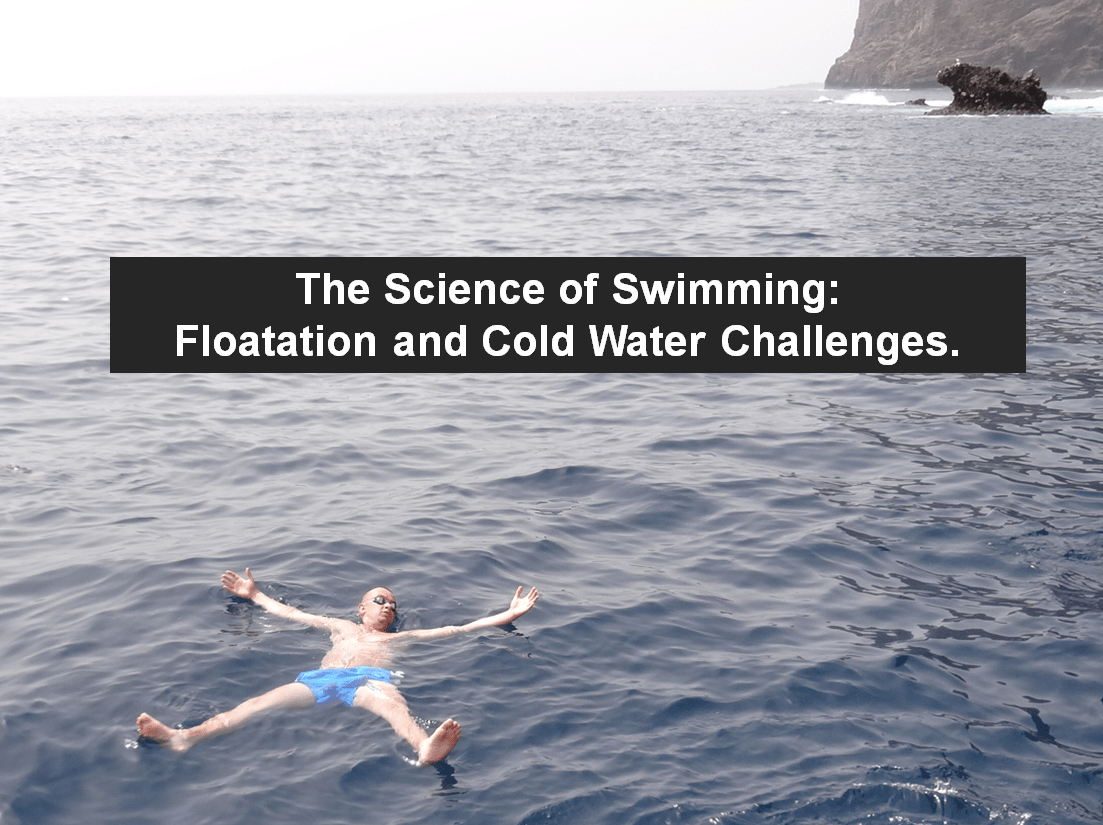
But is equally true that the oceans are dangerous, no matter how competent a swimmer you might be; keeping afloat in the open ocean is extremely difficult for more than a few hours at a time. My advice if you do find yourself stranded at sea is not to exhaust yourself trying to battle the currents; instead float on your back while you await rescue. Though, in my opinion, “floating” is really the wrong word to describe what happens when humans bob about in the water.
Floating is what boats do. They are majestic; they cruise along with just a small portion of their bulk submerged. But you as human being, whenever you try to ‘float’, most of your body sinks; if you are lucky you can just about keep your nose poking out of the water while you snort like a whale, breathing in air while simultaneously trying, and usually failing, keep water from getting up your nose. Real floating, in my view, entails not just resting on top of water, but doing so with ease. But that’s not the standard definition, and it’s certainly not what Archimedes meant when he discovered the principle of floating 2.000 years ago, and famously shouted ‘Eureka!’ in his bathtub.
Archimedes was a Greek mathematician and engineer. He noticed that when you get into a bath, the water level goes up. The reason is obvious enough: you’re sitting where some of the water used to be. It doesn’t get compressed underneath you like a foam mattress would; instead, because it is a liquid, it flows around you and finds somewhere else to go. In the contained space of a tub, the only place for it to go is above the initial water level. If the bath is already full when you get in, then the water will flow over the edge of the tub and on to the floor. This is where Archimedes’ famous experiment comes in. By collecting the water that spills over the edge in another vessel, it tells you something interesting: the weight of that water equals the so-called buoyancy force acting on you. If that force is lower than your weight, you will sink; otherwise you will float. This applies to any object. Eureka!

What Archimedes had discovered is that you can predict whether something will float or sink by simply working out the weight of water it will displace. For solid stuff you just have to compare the density of the material to the density of water. Thus wood, which weighs less per volume than water, is less dense than water, and so it floats. Steel is more dense than water so it sinks. But there is a trick: you can still make ships of steel if you make them hollow. Then their average density can be less than water, and so they float. It’s as simple as that.

Fast-forward 2,000 years from Archimedes’ heyday, and we find that the price of steel is now low enough for us to actually be able to build ships this way; our current maritime shipping fleet, which carries 90% of the world’s traded goods, is made up almost entirely of steel ships.
The human body is made up of materials of varying density: there are dense bone and less dense tissue, and in some places we are hollow. Overall we’re a bit less dense than water, which is why we can float. But if you adjust your density to exactly match the water’s, by wearing something heavy – a metal belt, for instance – you’ll be in a state of neither sinking nor floating; you’re neutrally buoyant, the ideal state for scuba diving.
When you’re neutrally buoyant under water, there’s no net force trying to make you float to the surface, nor is there a force making you sink to the bottom of the ocean. In your scuba gear, you’re effectively weightless, free to explore the coral reefs and sunken wrecks of the deep. It’s so close to the feeling of weightlessness you’ d find in space that astronauts train in swimming pools. Without the aid of scuba equipment, the human body floats. But our bodies are only slightly less dense than water, so more than 90% of our body needs to be submerged in order displace enough water to support our weight. Fatter people are more buoyant than thinner people because their fat to bone ratio makes them less dense. Wetsuits also make you more buoyant – they’re coating you in a significant layer of material that is less dense than water.
It’s a little bit easier to float in the sea than it is in a swimming pool, because sea water has minerals dissolved in it like salt, or sodium chloride (NaCl). The sodium (Na) and the chlorine (Cl) get inside the liquid by splitting up and inserting themselves between the water molecules. Having these atoms inside it makes the water more dense, so you don’t need to displace quite so much water to counter your weight as you would in pure water. In fact, the Dead Sea in the Middle East has so much salt in it (10 times as much as the Atlantic Ocean) that you can bob around like a duck right on top of it.
Once you can float, you can swim: one of life’s greatest pleasures. In water, not only are you weightless, but you can glide like a dancer. There’s a hidden world lying just under the surface. Forget the expense of going to Mars and the excitement of searching for life on other planets – the oceans are, in all practical respects, alien worlds for us. By donning a pair of goggles and ducking under water with a quick kick of the legs, we can visit them. Gliding down to the turquoise depths of a coral reef is one of the most wondrous things you can ever do. The fish observe you with weary eyes and flick their tails to swerve expertly out of your way. When you swim, you reach forward with one arm outstretched and, by pulling it back, you cause the liquid around you to move rapidly enough to prevent the water molecules from moving past each other, so they jam against one another, exerting a force on you. It’s that force which propels you forward in the opposite direction.
This is the essence of swimming – your arms and your legs are constantly moving the water behind you, which has the effect of pushing you forward. It’s not just thrilling; you essentially become a different person. Whereas on land you might be clumsy and plodding, in the water you can whirl and glide like a dolphin: you’re free. When holiday season starts and you want to go to the sea side I bet that in case you decide to swim and enjoy your holiday, you will choose warm destinations where water is comfortable to jump in. But in the same time there are people who are willing to challenge their bodies and they just dive in cold water even during the winter such as the well known swimming habits of people living in the northern countries or even most of western Europe such as Ireland, UK and even France (on the Atlantic side). In Ireland for example rarely gets truly warm water but still people of all ages sometimes are jumping into cold water and enjoy the experience to swim in a water of 10°C.
Diving into 10°C water is not a comforting feeling. It is more like a slap in the face. It’s not that the temperature is so extremely cold, but that you’re surrounding your skin with water that’s a good 25°C colder than it is. The water molecules draw heat away. But since liquids are denser than gases, there are many more molecules interacting with your skin per second than when you’re just exposed to the air, so the heat conduction away from your warm skin is that much more extreme.
What makes it feel worse is another characteristic of water, called Specific Heat Capacity usually denoted by c. Specific heat is defined by the amount of heat needed to raise the temperature of 1 gram of a substance 1 degree Celsius (°C). The specific heat capacity of water at 20°C is C= 4,180 J/kg°C (Joules per kilogram per degree Celsius). This means that it takes 4,180 J to raise the temperature of 1 kg of water by 1°C. Water has a high specific heat, meaning it takes more energy to increase the temperature of water compared to other substances. This is why water is valuable to industries and in your car’s radiator as a coolant. The high specific heat of water also helps regulate the rate at which air changes temperature, which is why the temperature change between seasons is gradual rather than sudden, especially near the oceans.

When water molecules are exposed to something hot, they jig about faster. These vibrations are what we call temperature. So the faster they go, the hotter the water gets. The hydrogen bonds holding the water molecules together strongly resist this vibration, so it takes a lot of heat to increase the average temperature of a liter of water molecules by even just 1 °C. To put this in perspective, it takes 10 times more energy to heat up water than it does to heat up the same weight of copper (Cu).
This feature of water, its exceptional heat capacity, explains why it takes so much heat to make a cup of tea. It also explains why an electric kettle is typically the most energy-intensive gadget in the kitchen. But that’s just one of many ways that water’s high heat capacity – the highest of any liquid except ammonia (NH3)– affects us. It’s also what allows the oceans to store a lot of heat, and so their temperature always lags behind the air.
In Ireland for example the air temperature might heat up to 22°C in a sunny summer day, while the sea temperature will hardly change from 10° C. Sadly, for Irish people, this means that the sea never really warms up from the summer sun before winter comes again to cool it down. However this is a major advantage for us as a species because the high heat capacity of the oceans allows them to absorb a lot of the excess heat brought about by climate change. In other words, the oceans are stabilizing our climate, keeping us warm in the winter and cooling us in the summer.
However, when you dive into the cold sea, you have to swim, to be alive and alert; it is so uncomfortable that it forces you out of a conscious rational mindset. It’s impossible to worry about your failed experiments, unsubstantiated theories, or even your failed relationships when you’re gasping for breath – the very breath that is knocked out of you because you chose to dive into forbidding, uncontrollable waters. Hypothermia is always at the back of your mind when you’re swimming in cold water. Hypothermia sets in when your core temperature drops below 35°C. You start shivering uncontrollably and your skin changes color as your surface blood vessels contract, diverting blood towards your major organs. First you go pale, then your extremities turn blue. In very cold waters, the shock can cause uncontrolled rapid breathing, gasping and a massive increase in heart rate that can lead to panic, confusion and drowning. But even if you remain calm, swimming in 0°C water for just 15 minutes will be fatal, as hypothermia sets in and shuts down your muscles.The ocean’s ability to swallow you up without a trace is laid frighteningly bare when you look out at its harsh, seemingly endless expanse from the stratosphere, which is often the feeling I have every time travel by plane.
 Computer Aided Design & The 118 Elements
Leave a comment