
PAST USES
Hydrogen gas is the lightest element of all. The prime components of air, nitrogen (N) and oxygen (O), are 14 and 16 times heavier, hence giving hydrogen a dramaticly high buoyancy. This lightness of hydrogen made it a natural choice for one of its 1st practical uses – filling hot-air balloons. No balloon soars as well as a hydrogen balloon, besides this hydrogen-filled balloon can fly higher than air-filled ones.
The 1st such aerial vessel was the creation of French scientist Jacques Charles in 1783, who was inspired by the Montgolfier brothers’ hot air success a couple of months before to use hydrogen in a balloon of silk impregnated with rubber. Being much less dense than air, hydrogen is also easier and cheaper to produce than helium (He). So Hydrogen seemed to have a guaranteed future in flying machines, reinforced by the invention of airships built on a rigid frame, called dirigibles in the UK, but better known by their german nickname of “zeppelins“, after their enthusiastic promoter Graf Ferdinand von Zeppelin.These airships were soon the liners of the sky, carrying passengers safely and smoothly, used in city-to-city air travel in the early 1900s, and in trans-Atlantic crossings in the 1920s and 1930s.
At the beginning of the 20th century, hydrogen was therefore manufactured in large quantities for such airships. During World War I, german zeppelins were used in bombing runs over England, since they could fly higher than the British planes. But despite of its ultimate lightness, hydrogen has another property that killed off airships – it is highly flammable.
On May 6, 1937, the million liters of hydrogen contained in the frame of the german dirigible LZ-129 Hindenburg caught fire as it came in for a landing at Lakehurst Naval Air Station in New Jersey – United States. This was a catastrophic accident in which 35 people out of the 97 aboard and one person on the ground were killed.

The destruction of the vast zeppelin the Hindenburg, probably by fire caused by static electricity, was seen on film by shocked audiences around the world. The exact cause of the fire is still the subject of speculation, but a sure thing this disaster signaled the beginning of the end for airship travel. The hydrogen airship was doomed. However the barrage balloons used in England during World War II, were filled with hydrogen. Hot-gas filled baloon are still used today mostly for entertainment experience, but the hydrogen as filling gas was replaced by helium as He is nonflammable. Modern “blimps” use helium to provide lift, which avoids the problem of hydrogen’s flammability.
——————————————————————————————-
Also since the early 20th century, hydrogen has been used in large quantities to produce fats for the food industry, hydrogenating cheaper liquid vegetable oils; in this reaction, hydrogen atoms add to the carbon-carbon double bonds in the vegetable oils (double-bonded carbons bond to fewer hydrogen atoms than single-bonded carbons — i.e., they are unsaturated with respect to hydrogen) converting them into saturated fats, which are generally solids at room temperature and have a longer average-life than liquid oils. However, as far back as the 1950s, research found that saturated fats increase the risk of cancer and heart disease. Since then the use and demand for hydrogenated fats gradually started to decline.
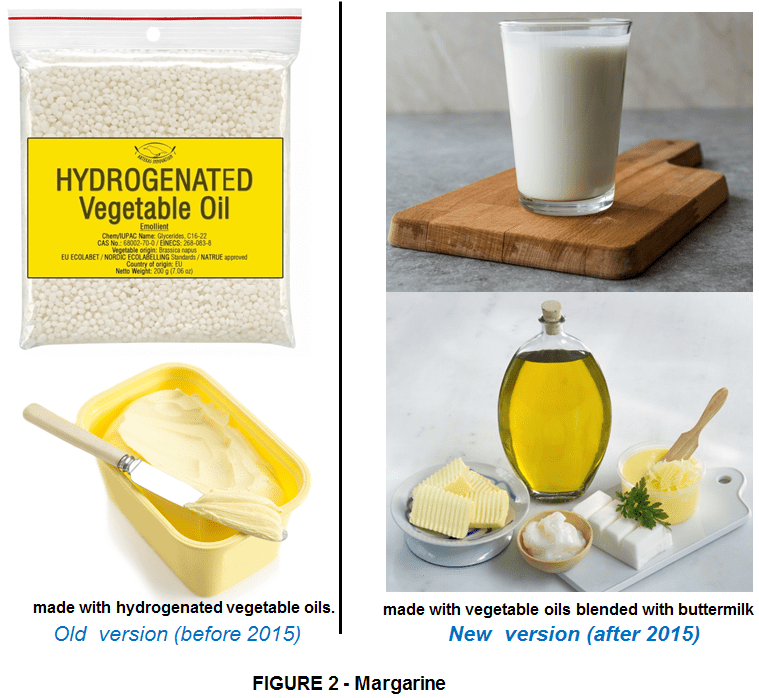
Hydrogenated oil comes in two forms: partially (trans fats) or fully hydrogenated. In 2015, the FDA (Food and Drug Administration) had actually confirmed that partially hydrogenated oil is not safe, and removing it from food could prevent thousands of heart attacks. So in 2018 the trans fat was officially phased out. Unlike partially hydrogenated oil, the FDA still allow products to use fully hydrogenated oil as of 2018. Besides in 2020, the FDA released certification that states fully hydrogenated rapeseed oil is safe for sparing use in food products. Hence due to concern about the effects of this substance on health, today currently most margarines are made with vegetable oils blended with buttermilk, instead of hydrogenated vegetable oil.
CURRENT USES
In Agriculture
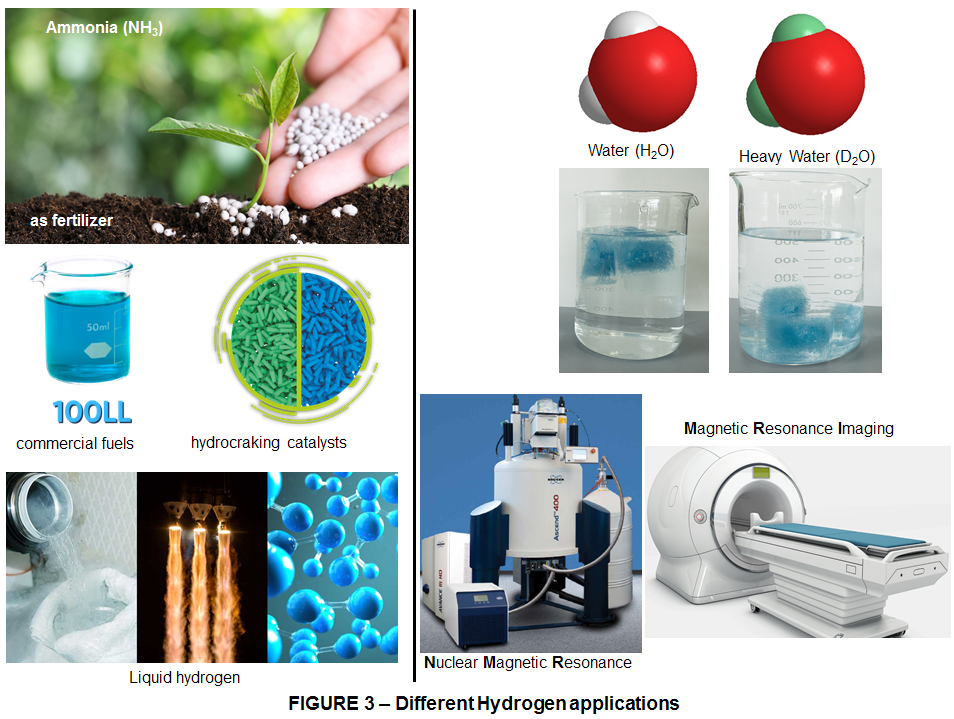
Today nearly two-thirds of worldwide industrially produced hydrogen is used to make ammonia (a compound of hydrogen and nitrogen – NH3), from which around 90% of this goes to make fertilizer.
In Chemical & Fuel industry
Most of the rest of the produced hydrogen and not used in agriculture, is used in the processing of crude oil, namely in fuel refinement to help break down (hydrocracking) the large hydrocarbon molecules into smaller molecules required in commercial fuels and to clean the hydrocarbon molecules of unwanted sulfur atoms.
There are many other uses for hydrogen such as: catalytic hydrogenation of carbon monoxide (CO) and organic compounds, to create compounds such as cyclohexane and methanol (which are used in the production of plastics and medicines). For instance large amounts of hydrogen are used in the preparation of methanol by the reaction CO + 2H2 → CH3OH.
Hydrogen is used to reduce aldehydes, fatty acids, and esters to the corresponding alcohols. Aromatic compounds can be reduced to the corresponding saturated compounds, as in the conversion of benzene to cyclohexane and of phenol to cyclohexanol. Nitro compounds can be reduced easily to amines. Hydrogen is used to manufacture glass and silicon chips, among other important products.
In Space Exploration
Since the terrible accident with LZ-129 Hindenburg dirigible in 1937, hydrogen is for now less used as fuel, yet it has remained a player in the field of transport because of the raw efficiency of its combustion. Many of NASA’s rockets, including the 2nd and 3rd stages of the Apollo Program’s Saturn V and the Space Shuttle main engines, are powered by burning liquid hydrogen with pure oxygen. For instance the Saturn V rockets that launched the Apollo lunar missions used:
- in its 1st stage (S-IC) => 209.000 gallons of kerosene and 334.500 gallons of liquid oxygen;
- in its 2nd stage (S-II) =>260,000 gallons of liquid hydrogen and 83,000 gallons of liquid oxygen
- in its 3rd stage (S-IVB) => 69,500 gallons of liquid hydrogen and 20,150 gallons of liquid oxygen;
The Space Shuttle main engines use 385,000 gallons of liquid hydrogen (H2) and 143,000 gallons of liquid oxygen (O2).
Liquid hydrogen is used in the laboratory to produce low temperatures
In Nuclear Energy
Heavy water – which is is water made from 2 atoms of deuterium (a H isotope, twice heavier that ordinay hydrogen) and 1 atom of oxygen- D2O – is a form of water litterally heavier than normal water, is used as a moderator in nuclear reactions: it slows down fast-moving neutrons, allowing them to be captured more easily by other nuclei. The generation of heavy water was important during the research on nuclear fission that went into the Manhattan Project during World War II, hence creating the 1st atomic bomb. Because the deuterium in heavy water is heavier than ordinary hydrogen, the consumption of heavy water disrupts some cellular processes, especially those that rely heavily on hydrogen bonding: seeds grown in heavy water do not germinate, and rats die after a week of drinking nothing but heavy water, when their body water reaches 50% deuteration. For a typical person, a fatal dose would require drinking nothing but heavy water for 10 to 14 days, so it’s pretty doubtful that heavy water poisoning will be featured on CSI (Critical Safety Index) anytime soon.
In Medicine
Hydrogen is also important in a form of spectroscopy called Nuclear Magnetic Resonance (NMR). In this technique, a sample is placed in a powerful magnetic field (usually produced by a superconducting magnet) which causes the hydrogen atoms in the sample to resonate between two different magnetic energy levels; pulsing the sample with a burst of radiofrequency radiation (typically between 200 to 500 MHz) causes the hydrogen atoms to absorb some of this radiation, producing a read-out called an “NMR spectrum” which can be used to deduce a great deal of structural information about organic molecules. Since almost all organic molecules contain hydrogen atoms, this technique is widely used by organic chemists to probe molecular structure; it can also be used to determine a great deal of information about extremely complex molecules such as proteins and DNA. The technique is nondestructive, and only requires small amounts of sample. NMR spectroscopy can also be performed with the carbon-13 isotope, and several other isotopes of other elements.
The same technology like NMR is also used in an important medical imaging technique called Magnetic Resonance Imaging (MRI); the water molecules in different environments in the body respond to very slightly different magnetic field strengths, allowing images of tissues and organs to be obtained. This technique can be used in diagnosing cancers and creating images of tumors and other diseased tissues. MRI is also used to study how the brain works by looking at what areas of the brain “light up” under different stimuli. (The term “nuclear” is avoided in the medical application because of its unpleasant associations, even though the only radiation involved is similar to that of an FM radio transmitter).
In Household applications
Common applications involving hydrogen are related to the hydrogen compounds known as household acids and bases. The most common such examples are shown in fig 4:


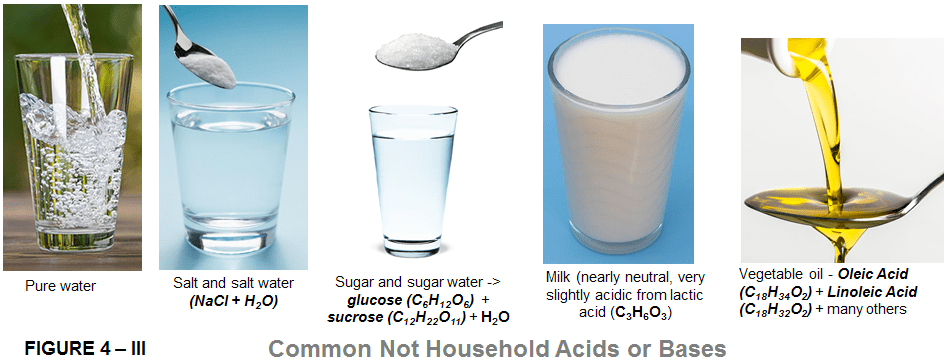
The acids (as shown in Fig 4-I) are often found to have a sour taste. Hydrochloric acid, sulfuric acid and nitric acid are examples of acids that are more likely to be found in laboratories and industry. Hydrochloric acid is also found in the gastric juices in the stomach. People even use acids in an artistic process known as acid etching. In acid etching, a metal is covered in a waxy material that is resistant to acid. The bare metal is then exposed in the desired pattern and the sample is placed in an acid bath. The top layers of the exposed metal are permanently removed, creating the desired image.
Baking soda is a salt, but the ions it breaks into act as acids or bases (amphoterism). In contrast, table salt (sodium chloride, NaCl) does not break into ions that act as acids or bases. Bases are usually found to have a bitter taste and feel slippery (soap is a good example). Acids and bases are also important commercial components in the fertiliser, plastics, and petroleum refining industries.
In Metalurgy
Another increasing use of hydrogen is in the direct reduction of iron ores to metallic iron (Fe) and in the reduction of the oxides of tungsten ( W) and molybdenum (Mo) to the metals. A hydrogen (reducing) atmosphere is employed in the pouring of special castings, in the manufacture of magnesium (Mg), in the annealing of metals, and for the cooling of large electric motors.
 Computer Aided Design & The 118 Elements
Do you are saying that our bodies are subject to the same chemicals that are used in fuel for our cars or to harden metal and plastics. That is so messed up. How did we get so creedy and in human to think life is suppose to last “forever” putting this junk in our bodies. Industry has no compassion for life just money. Sad real sad.
LikeLike
Yes that’s exactly the case. Human body is basically made of Hydrogen (10%) and Oxigen molecules (65%), (actually we are mostly made of water) and another 2 elements namely Carbon (18.5%) and Nitrogen (3,5%). Carbon and Hydrogen are both the building blocks for molecules in fuel and other chemicals used metal hardening and plastics. so obviously exaclty the same elements we have in our body. And yes you’ re right Industry is just for money, I agree with you 🙂
LikeLike