
In my early years I was (process) engineer myself, and I had to collaborate with Product Managers and Product Designers. I still do it but meantime I have become Product Designer myself. My work involves a lot of engineering, particularly mechanical engineering, hence I always want to be surrounded by engineers, I am helpless without them.
But somehow from I what is observe collaborating with different Tech-businesses I often see people holding such positions as Product or Program Managers in tech companies and they have no idea what engineering is. These people somehow in some favorable circumstances they end up holding such role but they have no idea how to work with engineers. They expect things will go as they expect, but the outcome is often that the engineers don’t deliver. Of course when this is the case then the blame always go to engineers not on Program Managers. Well… I have a friendly advice: Dear Project Managers, when you promise something to your business partner make sure you talk with your engineers beforehand. When engineers don’t deliver as you would expect, they do so for a reason and you must learn how to work effectively with them. I don’t know how to say this better but in a tech products company you can never thrive as Product Manager (PM) or Product Designer (PD) if you previously have never worked for a as engineer. If you have never studied engineering before then it’s even worse.In this case the best you can do is to simply step back; find a job that fits with your academic background.
The engineering roles (also commonly known as developers or, in some circles, programmers, mechanical designers or electrical engineers ) are essential for a Tech-Products Business, therefore is essential to have a good collaboration with all of them.
THE ENGINEERS =>The good ones are hard to find, but once you have them, it’s the role of PM mostly but also of PD to make engineers engaged and nurture the best relationship with them. The Engineers are the brain of your business. If you want to be a successful Product Manager, take this very seriously:
NEVER TRY TO TELL ENGINEERS HOW TO DO THEIR JOB.
If you are Project Manger in a Tech-company, then the engineers in your team are there to tell YOU what to do. It’s never the vice-versa. The Engineers are usually smart creative guys and they are the once who give you the best ideas of a new product. You absolutely need them. Don’t give them reasons to search for other opportunities. Always support them & have an open communication with them. You have to learn from them & work FOR THEM. Do your best to keep them in your team. In a Tech Company you can’t do anything, without engineers.The 3 big categories of engineers a Tech-Products Company must have are as follows:
- Software engineers
- Electrical engineers
- Mechanical engineers
Let’s see what these guys are doing.
WHAT IS THE SOFTWARE ENGINEERING
This is the most wanted type of engineers needed particularly for a Tech-Products company. However, as the technology of today has become digital and Artificial Intelligence is more and more present in our lives, the software engineer is essential for any business.
SOFTWARE ENGINEERING is a discipline of engineering that deals with all aspects of software production. The outcome must be a fault-free software, which must be reliable and works on real machines efficiently, is delivered on time and within budget, that satisfies the client‘s needs. Furthermore the software must be easy to modify when user‘s needs change. A good software must have a great User Interface and must deliver a great User Experience.
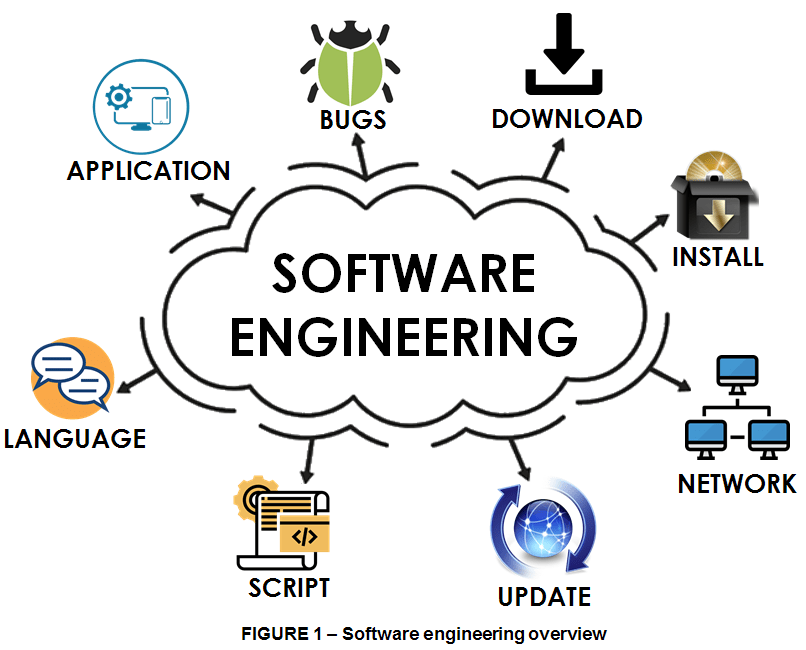
Software engineers should adopt a systematic and organized approach to their work and use appropriate tools and techniques depending on the problem to be solved, the development constraints and the resources available.
WHAT IS THE ELECTRICAL ENGINEERING
This is likewise essential engineering ingredient particularly for a Tech-Products company, yet many non-tech businesses need it too. The electrical engineering refers a group of highly educated engineers who work on electrical circuits, light, energy, conductivity and they are all well assured that this job is highly necessary for the living and caring of people. For any activity we do in modern world we depend of electricity, hence having an electrical engineer around is essential.
ELECTRICAL ENGINEERING is a field of engineering that deals with the study and application of electricity generation, transmission, distribution and consumption of electrical energy for the benefit of mankind. Hence, a good functioning electrical device must have a great User Interface and must deliver a great User Experience.
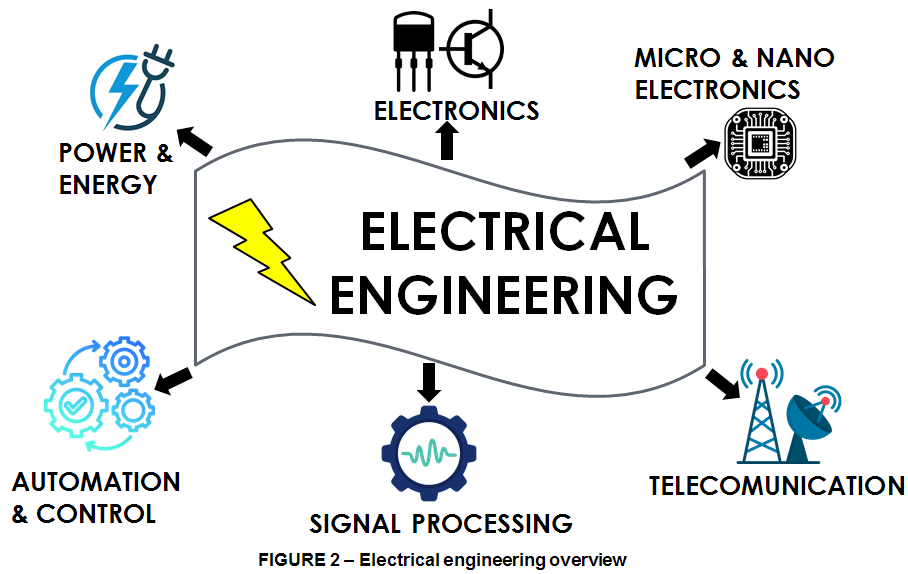
When you are working as an electrical engineer you have to be able to work with electricity and you need to be fearless of protons and neutrons.
You can’t have electricity and expect everything is going to work well, without electrical engineers.
WHAT IS THE MECHANICAL ENGINEERING
If your business is meant to create and deliver great experiences that can reduce or even eliminate the physical/manual hard work done by humans, then you absolutely need mechanical engineers. Every object created by man, both static (buildings, electronic devices, cookware, etc) and mobile (cars, ships, planes, satellites, robots, etc) are only possible with mechanical engineering. I would define mechanical engineering as a discipline of science based on 3 main characteristics:
- 1 – Is an engineering discipline that applies the principles of physics and materials science for analysis, design, manufacturing and maintenance of mechanical systems;
- 2– is the branch of engineering that involves the production and usage of heat and mechanical power for the design, productions and operation of machines and tools;
- 3– is one of the oldest and broadest engineering disciplines.
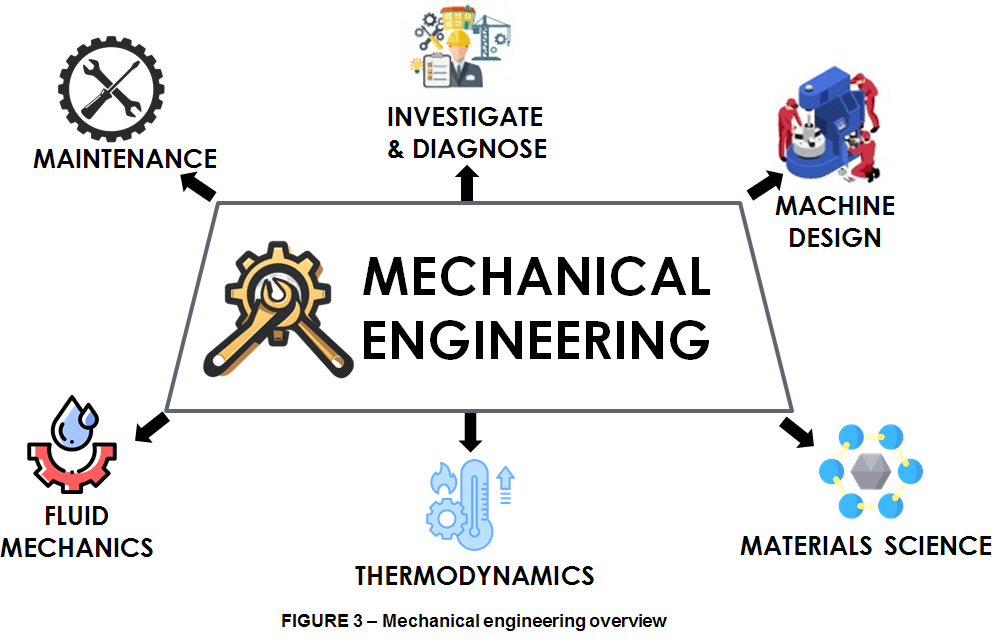
Mechanical engineering involves the design, construction and operation of innovative machines devices and systems. Hence mechanical engineers are needed in automotive, aerospace, military defense, manufacturing, entertainment, healthcare, oil and gas industry. The field encompasses the making of both large machinery and small moving components.
HOW TO WORK WITH ENGINEERS
If your relationship is strong, with mutual respect both ways, then your role as Product Manager is great as well. If your relationship is not strong, your days as product manager will be in most case limited on short-term. Therefore, this is a relationship worth taking very seriously and doing everything you can to nurture. Let your ego at home. This strong relationship begins with YOU: The Product Manager. You need to do your homework and bring to the team the knowledge and skills of good product management.
Engineers are typically smart and often skeptical by nature, so if you’re bluffing, they likely won’t be fooled. If you don’t know something, it’s much better to admit and say you’ll find out rather than try to bluster. It’s also hugely important that you have an actual appreciation for the demands and complexities of the engineering job. If you worked an engineer before or if you’ve studied computer science, mechanical or electrical engineering in school, you’re probably in a good position. But if not, I want to strongly encourage you to take a class at a local community college or online education where you’ll learn a programming language and some mechanical/electrical engineering stuff.
The purpose of developing this programming/engineering literacy is not so you start telling your engineers how to do their job but, rather, to significantly improve your ability to engage with and collaborate with your engineers. Less obviously, but at least as important, this knowledge will give you a much better appreciation for technology and the art of the possible. It’s also crucial that you share very openly what you know about your customers – especially their pain – the data, and your business constraints. Your job is to bring this information to your team and then to discuss the various potential solutions to these problems.
There is nothing wrong with you bringing a strong point of view, but you must constantly demonstrate to your team that you’re open minded, you know how to listen, and you want and need their help in coming up with the right product.
As a practical matter, you need to engage directly with your engineers every workday. There are typically two types of discussions going on each day.
- In the 1st type of discussion, you’re asking for their ideas and input for the items you’re working on in discovery.
- In the 2nd type of discussion, they’re asking you clarifying questions on the items they’re working on delivering to production.
Where a lot of product managers go sideways is in how they communicate with their engineers. Just as most product managers don’t like it when an executive or stakeholder spells out exactly what they want you to build, engineers generally don’t like it when you try to spell out how to build something. So, while it’s good if you have a strong technology understanding, it’s not good if you use that knowledge to do their jobs for them. You want to give your engineers as much latitude as possible in coming up with the best solution. Remember, they are the ones who will be called in the middle of the night to fix issues if they arise.
One last thing to keep in mind: the morale of the engineers is very much a function of you as the Product Manager. It is your job to make sure they feel like missionaries and not mercenaries. You do this by involving them deeply in the customer pain you are trying to solve and in the business problems you face. Don’t try to shelter them from this-instead, share these problems and challenges very openly with them. They will respect you more for it, and, in most cases, the developers will rise to the challenge.
There’s probably no more important relationship for a successful Product Manager than the one with your own team of engineers.
THE TECH LEAD ROLE
There are, of course, many different types of engineers. Some focus on engineering the user experience (generally referred to as front-end developers, mechanical designers), and some focus on specific technologies (for example, database, search, machine learning). Similarly, as with most other roles, there is a career progression for engineers. Many go on to become senior engineers, and some go from there to principal engineer or architect roles. Others move into more of an engineering leadership path, which generally starts with the tech lead role (a.k.a. development lead, or lead engineer).
In general, from the product management perspective, any senior engineer is helpful because of the broad knowledge he or she brings that pertains to what is possible. However, a tech lead not only has this knowledge – and is responsible for helping to share this knowledge with the other engineers on the team – but the tech lead also has an explicit responsibility to help the product manager and product designer discover a strong solution. Not every engineer or even senior engineer wants to participate in discovery activities, and this is fine. What’s not okay is to have a team of engineers in which none of them wants to engage in discovery activities.
It is for this reason that the product manager and product designer work most closely with the tech lead. In some product teams, there may be more than one tech lead, which is all the better. It’s also worth pointing out that engineers often have different work styles, which is also true for many designers. The product manager needs to be sensitive to the best way to interact. For example, many product managers are happy to speak in front of a larger group, or even a group of senior executives, but many engineers or designers are not. It’s important to be sensitive to this.
 Computer Aided Design & The 118 Elements
Leave a comment