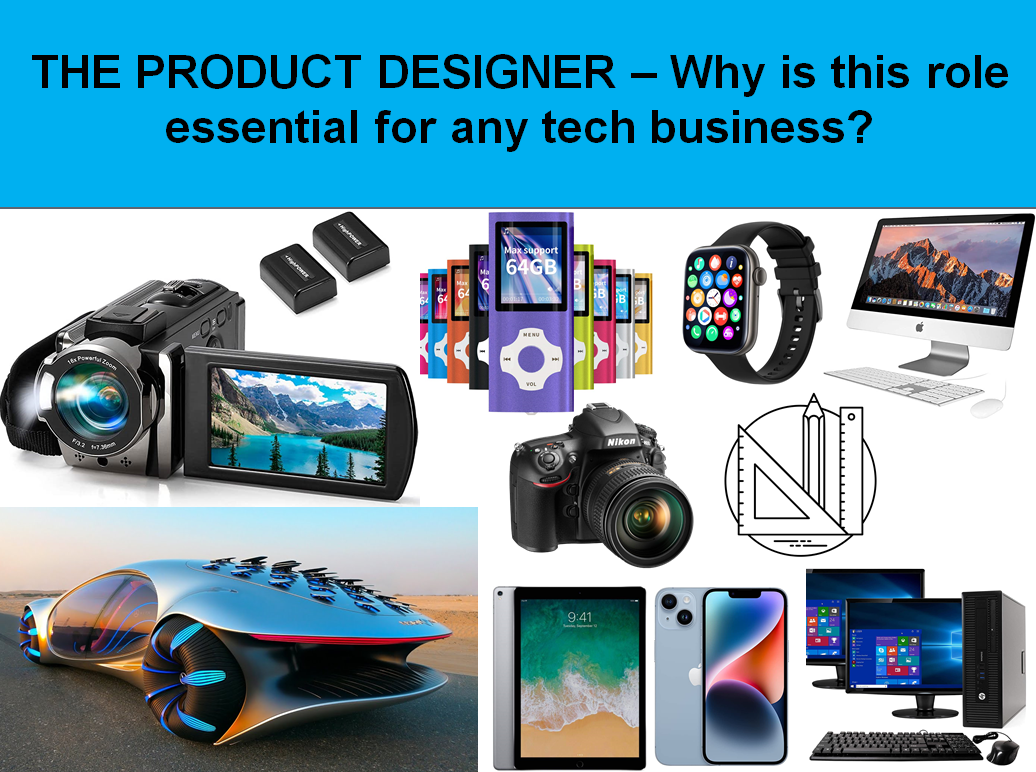
A Tech-Product Business without Product Designers is like a hospital without doctors. The role of Product Designer is therefore essential if you have a business in technology. 3 main disciplines are the ones that deliver high-quality and high-tech products:
- Software engineering
- Mechanical Engineering
- Electrical Engineering.
You either have all 3 of them or only one or some combinations, you MUST have at least a PRODUCT DESIGNER in your crew. Depending of the size of your company and how many different tech-products your company has to offer, you MUST have 1 Product Designer at each group of 20 engineers. From technological point of view the P.D. role is even more important than the Product Manager because the P.D. really knows what’s technologically possible and what’s not. The frequent problem I continuously see in Tech Companies, is that too many unskilled, untrained and very much incompetent staff is holding Product Manager roles and they barely improve something. People want to be Product Manager because first of all this offers them the feeling of having a status and of course the financial benefits which usually are the highest. But these incompetent Product Managers are exactly the root cause why often times Tech-Companies fail to deliver. When failure in business impacts the financial stautus of the company, instead of removing the incompetent Product Managers the company board management together with HR department decide to dismiss lower level staff such as Engineers, Workers and anyone else who is not holding a managerial position in the company. This is a totally wrong approach in leadership for any business.
When company struggles to stay on the market, the problem are NEVER the Engineers and Workers, the Problem are ALWAYS the Managers: They fail to lead.
In this post I want to talk about the Product Designer role. But I’m not trying to speak here to designers- I’m aiming this at Product Managers who need to learn how to work effectively with designers.
It’s amazing to me how many companies I encounter that they just don’t understand why having strong and talented designers is so important. They understand the need for engineers, but often will waste significant time and money because they do not understand the need for design. And when bad times come for the company, they regularlly fire / dismiss the wrong staff.
Hence, the modern Product Designers are responsible at least for the followings 5 activities:
- Product Discovery
- Holistic User Experience Design
- Prototyping
- User Testing
- Interaction and Visual Design
Now let’s explore a little bit what exactly each of these mean.
Product Discovery
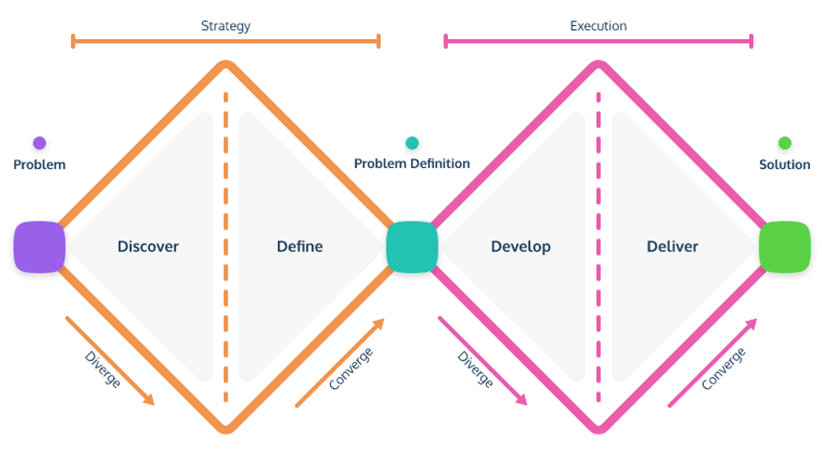
In the old model, designers took requirements or specifications from product managers and used that to create their designs.
In contrast, modern product designers continuously collaborate with product managers and engineers-from discovery to delivery. Similarly, rather than sitting with fellow designers, the modern product designer sits side by side with his or her product manager, a full partner with the product manager on product discovery.
Rather than being measured on the output of their design work, the product designer is measured on the success of the product. Given this, product designers have many of the same concerns as product managers. They are deeply oriented around actual customers and the value their product brings to those customers. They also understand that the product is in service of a business and can incorporate those constraints into the design of the product. Designers must further understand that the user experience is as important to customer value as is the underlying functionality.
Holistic User Experience Design
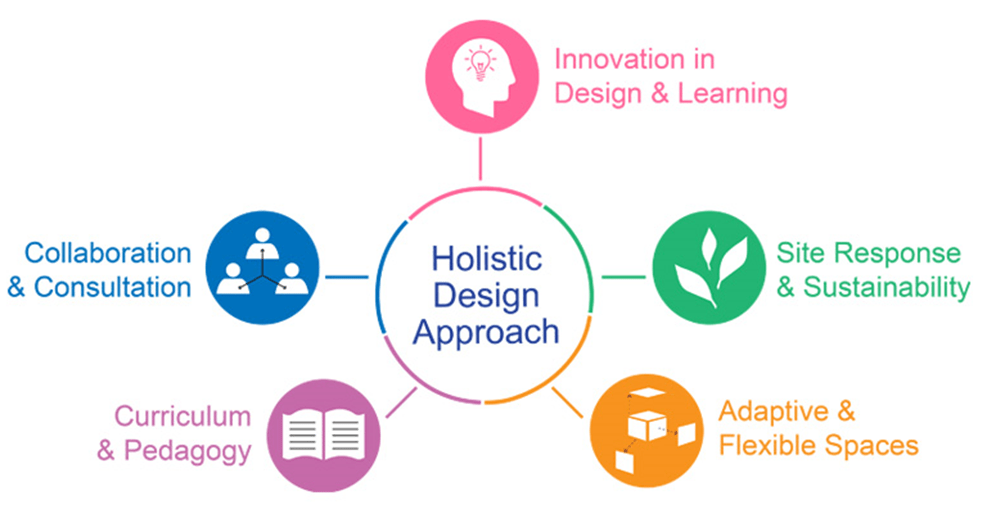
User experience (UX) is much bigger than user interface (UI). Some people even use the term customer experience to further emphasize the point. UX is any way that customers and end users realize the value provided by your product. It includes all the touch points and interactions a customer has with your company and product over time. For modern products, this usually includes multiple different interfaces, as well as other customer touch points (e-mail, marketing campaigns, sales process, customer support, and so forth). With some products, UX also includes offline services, such as riding in a car summoned through Uber or staying in a house sourced through Airbnb. Good product designers think about the customer’s journey over time as they interact with the product and with the company as a whole.
Depending on the product, the list of touch points could be very long, considering questions as:
- How will customers first learn about the product?
- How will we onboard a first-time user and (perhaps gradually) reveal new functionality?
- How might users interact at different times during their day?
- What other things are competing for the user’s attention?
- How might things be different for a one-month-old customer versus a one-year-old customer?
- How will we motivate a user to a higher level of commitment to the product?
- How will we create moments of gratification?
- How will a user share his experience with others?
- How will customers receive an offline service?
- What is the perceived responsiveness of the product?
Prototyping
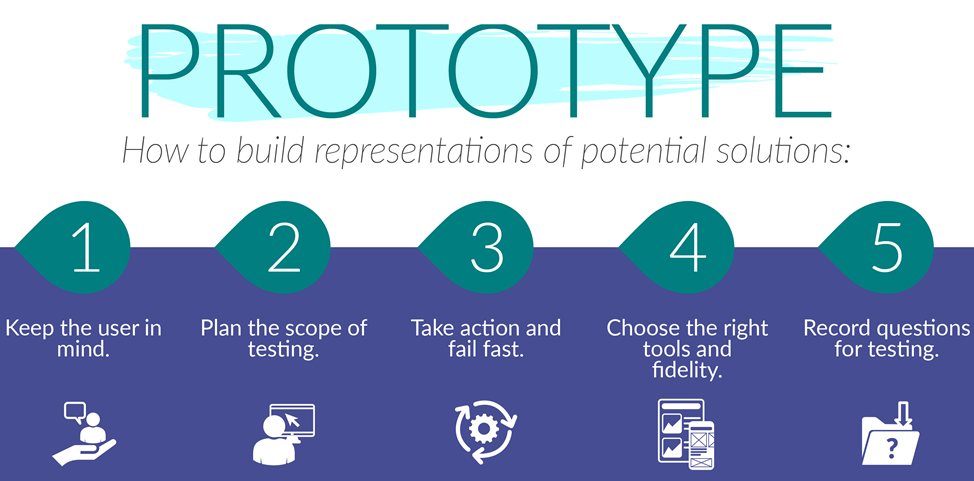
Depending on which product you design there are many techniques used to test out product ideas. In the future I will write a post about these techniques too. But here I just want to say that many of these techniques depend on prototypes, and most of these prototypes are created by the Product Designer. Good product designers use prototypes as their primary canvas for communicating ideas, both internally and externally. They are generally comfortable with many different prototyping tools and are able to apply the correct one for the task at hand.
User Testing
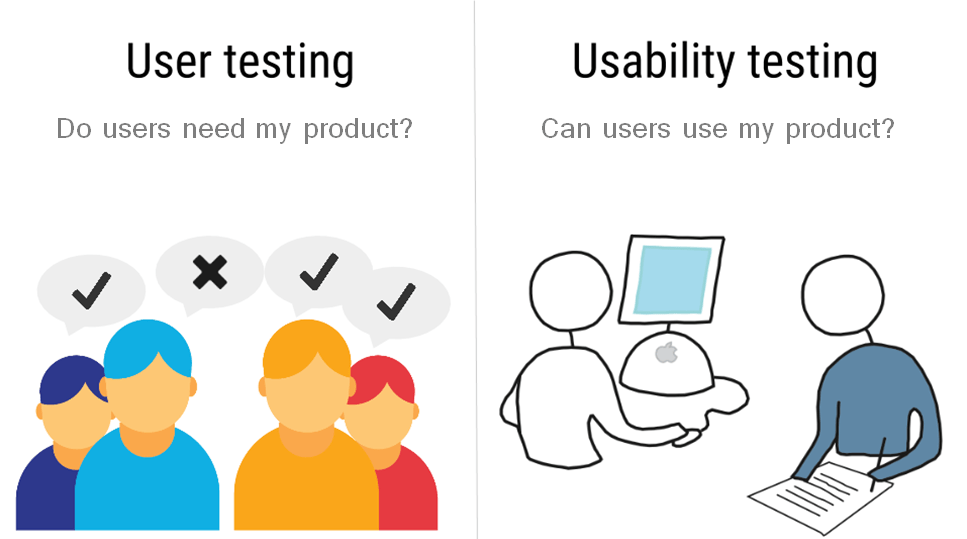
Good product designers are constantly testing their ideas with real users and customers. They don’t just test when a prototype or idea is ready; they build testing into their weekly cadence, so they’re able to constantly validate and refine ideas as well as collect new insights they might not have been looking for. It also means that they aren’t as likely to become too attached to ideas before they come in contact with objective, outside opinions. User testing is broader than usability testing. Product designers and their product teams utilize the opportunity to assess the value of their ideas. Will customers use or buy the product and, if not, why not?
Interaction and Visual Design
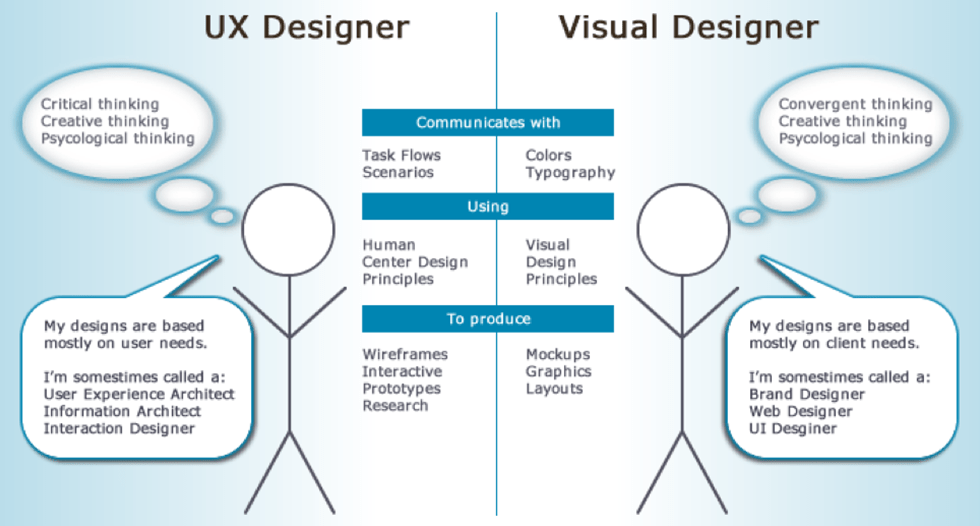
Now even if my background is mechanical engineering, I have also collaborated with electronics hardware and software designers, I can clearly say that Interaction and Visual design have historically been considered separate roles.
Interaction design generally includes the underlying conceptual models (e.g., a photo management application may have photos, albums, projects), task flows, and control layouts to manipulate those concepts.
Visual design includes composition, typography, and how the visual brand is expressed.
Modern product designers may have different strengths but, generally, have some level of skill with both interaction and visual design. Having a more complete tool set allows them to work quickly at different levels of fidelity, depending on the context. It also allows them to design experiences in ways that wouldn’t have been natural when thinking of interaction and visual design separately. This is particularly important in mobile interfaces in which designers must often create new models of interaction fundamentally intertwined with the visual design. If you’re building devices such as consumer electronics, there’s another critical dimension to design-industrial design-which looks at materials and design for manufacturing.
Therefore if you’re building a tech business the above mentioned facts are exacly the reason why you MUST have a great Product Designer in your staff.
 Computer Aided Design & The 118 Elements
Leave a comment