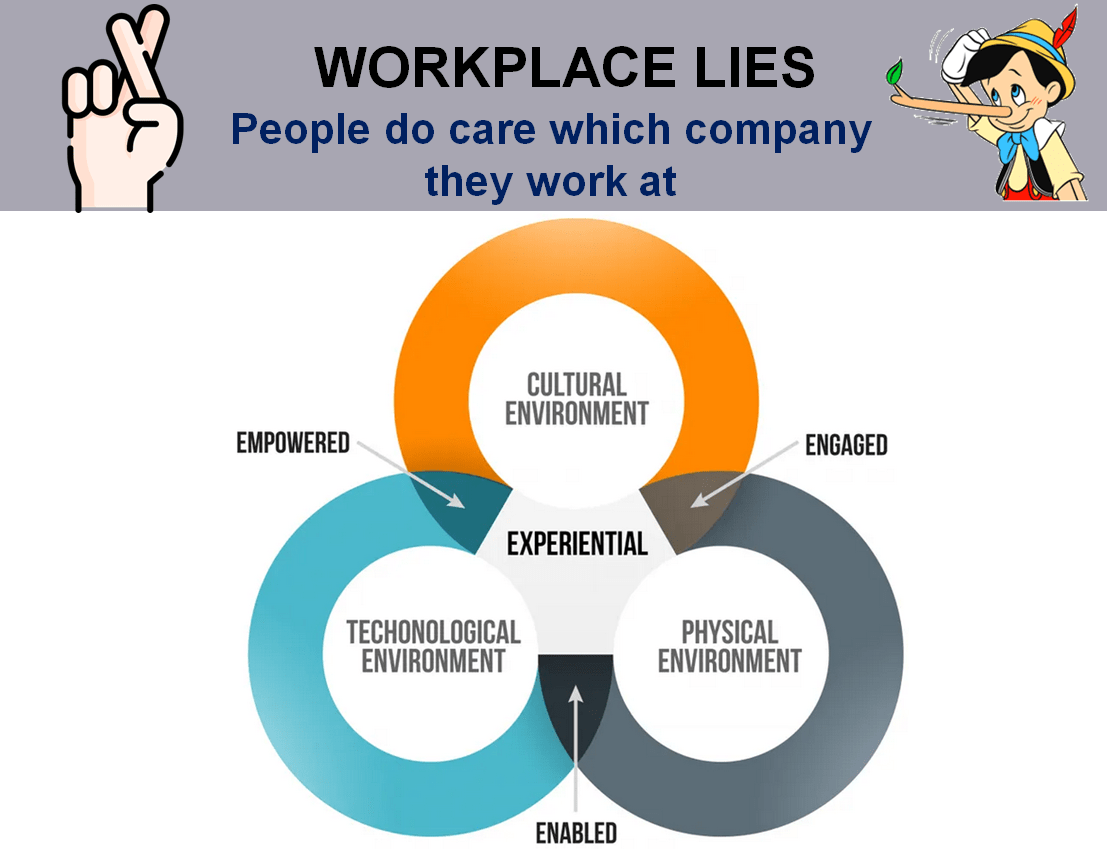
When you’re done with building your academic/educational background the following next 3 questions pop up into your mind:
- Where should I work from now on?
- Is it a big deal to work at a multinational corporation or a maybe I should join a Start-Up business?
- Or it does not even matter?
These are legit question you ask yourself as soon as you finish your studies. You’ve got your certificates, degrees and everything that can attest your education background and now you must finally start your professional career working somewhere. But because you never did this before, you don’t know what’s outhere. All these questions are of course relevant. You might receive very various answers depending on who do you ask. Your parents for instance would tell you to go for a multinational company, some of your close friends would tell you a Start-Up business is not bad at all. If you are lucky enough any of these can be a good workplace for you.
Me too, I was there asking myself these question at the start on my engineering career. I heard many times people talking about jobs saying that “People care which company they work at”. Before to looking for a job for the first time, I was convinced that this is always the case. I had then the opportunity to see if this is true or not by myself. In spite of some good intended advice, during the years, already working in different workplaces, in different countries I can now only conclude that actually the correct answer to the questions I mentioned earlier is: it doesn’t matter. The truth is in general exactly the opposite, namely: PEOPLE DO NOT CARE WHICH COMPANY THEY WORK FOR.
If I you randomly ask the people working at let’s say a multinational company, why do they work there, I am pretty sure that the majority of them won’t be able to give you solid arguments for that. Most people work purely for financial stability and other fringe benefits, which in many cases multinational organization are doing good, offering a good benefits package. But that’s all. Almost nobody cares about the rest. Sure, why should you care, as long as the workplace is stable and you get your monthly paycheck regardless if you make progress in your career or not.
“We are a family“, “ All for one and one for all” “Together we change the world” “We make the best products for the everyone”, “The … (“company X”) way”, and so on. All these slogans are just empty words. You are never a “family” with your boss. When the company is losing business: market share this is always because of your boss, it’s because of his incompetence in leadership, it’s never because of you.
Yet however your boss will never resign, no matter the struggle your company is facing. It is always you, your boss won’t hesitate to remove you whenever he feels vulnerable. In your family I don’t think your dad for instance will kick you out when there is not much food left on the table. But your boss does. So next time when your company tells you “we are a family” that’s a bullshit. No you are not a in any family at your workplace. Most companies play the finite game. They go for immediate profit all the time, without having a long term vision. They put Profit First and people second, not even considering as a alternative for the better and to do the vice-versa.
In business like in life in general, profit is not always there. Sometimes it is, sometimes it isn’t. Your boss is the one to figure out how to navigate between good days and bad days your company is going through. Your boss is the one in charge to make sure you have everything you need to continue to do good job and to perpetuate the business in a long-term game. If your company want you to indeed feel like you are part of a sort of “family” then your boss must play the infinite game. I highly recommend you to read Simon Sinek’s book called exactly like that “The Infinite game”, in which he very clearly explain what that is.
Or else, you can only truly care for which company you work for, if that company is entirely or almost entirely yours. Elon Musk cares for Tesla and Space X, Mark Zurckerberg cares for Facebook, Steve Jobs cared about Apple and so on. Of course those people care, because they were in a good position in the company to do so, additionally they were passioned about it. But, in general most people are not that privileged and they don’t care. On the contrary, nowadays it is quite common that people change their jobs at every 3 or 4 years. Some even earlier. So once again, why should anybody care about the company they work for?.
From the outside looking in, it’s pretty hard to figure out what it might be like to work for a particular company. If you’re job hunting, you might start by searching online as many of us do – perhaps on Glassdoor.com or on one of the other job boards where employees can rate their current company – even on LinkedIn or Moster.com – or by talking to friends about where they’ve worked and what their experiences were. You might try to talk to a recruiter, although it’s tricky to do that if you’re not yet sure you’re going to apply. You might try to figure it out by reading the coverage of a company in the press, but this can be frustrating, since articles tend to focus more on a company’s products or its strategy, rather than on its culture per se. Wherever you look, you’ll find yourself wondering if what you’re discovering is really representative of the company, and is giving you a good sense of the inside story. In search of more objectivity and breadth, then, you might turn to Fortune magazine’s annual ranking of the 100 Best Companies to Work For. If you are indeed looking for a job, you read Fortune’s list in search of insights about a given company. And you start asking yourself the following:
- What will your colleagues be like?
- How will they treat you?
- What will a typical day be like?
- Will your work be interesting, challenging, and valued?
- Is this a company that really cares for its people?
If you go through the long process of applying, and interviewing, and negotiating an offer, and ultimately landing a job there, then next 2 questions must be addressed:
- Will this be a company that puts as much into you and your career as you’re going to put into it?
- What, precisely, is this list measuring about these companies?
Read the submissions, the press releases, and Fortune’s own descriptions of the winners, and the word you land on is culture.
Judging by these considerations, this thing called “culture” really matters. It is potentially more important than what the company does, how the company does it, how much the employees get paid, or even the company’s current stock price.
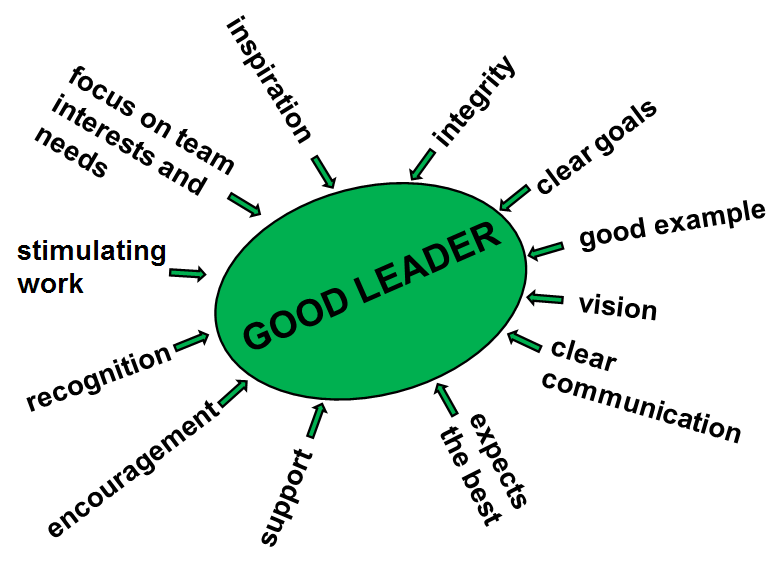
As a team leader you are going to be told, repeatedly, that you must take stock of all this because you are responsible for embodying your company’s culture, and for building a team that adheres to these cultural norms. You will be asked to select only applicants who fit the culture, to identify high-potentials by whether or not they embody the company culture, to run your meetings in a way that fits the culture, and, at company off-sites, to do the T-shirts and sing the songs. All of which is fine, right up to the point where you start to wonder what, precisely, you are being held accountable for. Read the Fortune list again and you’ll be struck by the fact that a very small percentage of what’s written about your company is in your job description. Having an on-site day-care facility, giving all employees 20% of their time to pursue their own interests, offering large rewards for referring a new hire, and building solar panels on the roof are all admirable initiatives, yet none of them is within your control. They are commitments made by others – the executive committee or the board – and while you may think them worthy, and may indeed be proud that they are something your tribe contributes to the world, you can’t do anything about them. They are off in some other place, far from the day-to-day projects and deadlines, the ongoing actions and interactions, that actually comprise your world of work. When people ask you what it’s “really like” to work at your company, you immediately know you’re going to tell them not about the solar panels and the cafeteria, but about what it’s really like. So you’ll get real, and talk about:
- how work is parceled out,
- whether many managers play favorites,
- how disputes get resolved,
- whether the real meeting happens only after the formal meeting is over,
- how people get promoted,
- how territorial the teams are,
- how large the power distance is between senior leaders and everyone else,
- whether good news or bad news travels fastest,
- how much recognition there is, and
- whether performance or politics is most prized.
You’ll get down to the 2-foot level of how work actually gets done, and try to tease out what your company truly feels like to the people on the ground. You won’t know whether to call this “culture” or not, just as you won’t necessarily know how to label each of these 2-foot-level details, but in every fiber of your being you’ll know that this ground-level stuff is what will decide how hard people will work once they’ve joined, and how long they’ll stay. This ground-Level stuff is what THEY truly care about. Indeed, this ground-Level stuff is what YOU truly care about. In which case, your most pressing question, as a team leader, will be something like this:
If I am to help my team give their best, for as long as possible, which of these details are most critical? Tell me the most important ones, and I’ll do my level best to pay attention to those.
Therefore saying that “people do care which company they work for” it’s a lie, it sounds so odd to label it like that, since each of us does indeed feel some sort of connection to our company and I think you’ll see that while what each of us truly cares about may begin as “company” it quickly morphs into something else rather different.
There shouldn’t be variation from team to team, because the day-to-day experience of working at this particular company should remain mostly consistent. But that’s not the case- in fact, it’s never the case. The statistical measure of variation is called range, and these scores always have a greater range within a company than between companies. Experience varies more within a company than between companies. When people choose not to work somewhere, the somewhere isn’t a company, it’s a team.
If I put you in a good team at a bad company, you’ll tend to hang around, but if I put you in a bad team at a good company, you won’t be there for long. The team is the sun, the moon, and the stars of your experience at work. When I push on the data, and examine closely its patterns and variations, I can conclude that: while people might care which company they join, they don’t care which company they work for. The truth is that, once there, PEOPLE CARE WHICH TEAM THEY’RE ON.
If the team has the same goal, share the same vision and the team leader creates a culture so that all people working in that team are like a true family – I mean the team members behave one to each other not only as colleagues at work but also real friends in their daily life – then YES. You might care. But unfortunately this just a minority. People still quit their jobs from those companies, and they are a lot. But at least one thing remain valuable forever: THE WORK EXPERIENCE at those companies.

INCOMPETENCE IN MANAGEMENT IS THE ROOT CAUSE WHY BUSINESSES FAIL
 Computer Aided Design & The 118 Elements
Leave a comment